
 REQUEST A QUOTE
 EN
EN English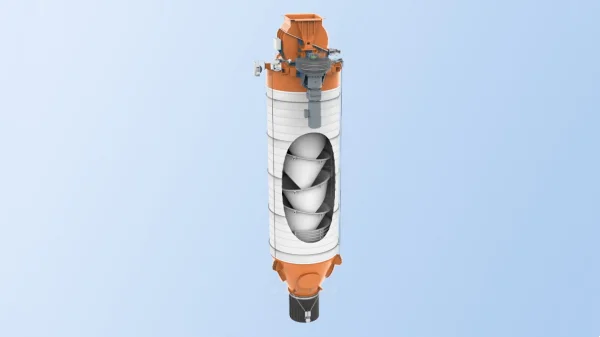
Just let we know what you want, and we will get in touch with you as soon as possible!


How a Cascade Chute Achieves Dust-Free Bulk Material Loading
Anyone who has stood near a bulk loading point knows how quickly dust can take over. A simple drop of material from a conveyor into a truck, wagon, or ship hold can create a cloud that spreads everywhere—onto equipment, into the air, and into people's lungs. Over time, this isn't just messy; it becomes a serious safety, environmental, and maintenance problem.
This is exactly why cascade chutes have become so important in modern bulk material handling. Their design is simple in principle but very effective in practice, especially when dust control is a priority.

1. The Real Reason Dust Is Created During Loading
Dust is not just about fine material. In most loading operations, dust is created because of air movement.
When bulk material falls freely:
- It accelerates rapidly under gravity
- It drags air with it
- When it hits the pile, the trapped air escapes violently, carrying dust with it
This combination of free fall and sudden air displacement is the main cause of dust clouds at loading points.
2. What Makes a cascade chute Different
A cascade chute changes how material moves and it is widely used in bulk material ship loader in modern terminals.
Instead of falling freely in one long drop, the material flows through a series of internal steps or angled surfaces—known as cascades. Each cascade slows the material down and redirects its path in a controlled way.
In simple terms, the material slides and rolls instead of falling and crashing.
3. Reducing Material Velocity Step by Step
One of the biggest advantages of a cascade chute is how it manages velocity.
As material passes through each cascade:
- Its speed is reduced gradually
- Impact energy is absorbed inside the chute
- The final discharge velocity is much lower
Lower speed means less air is dragged along with the material, which directly reduces dust generation.
4. Controlling Airflow Inside the Cascade Chute
Because material flow is controlled, airflow is controlled as well.
Inside a cascade chute:
- Air moves more slowly and evenly
- There are fewer sudden pressure changes
- Displaced air can be guided toward dust extraction points
This stable airflow is essential for achieving truly dust-free loading, especially for fine or dry materials.
5. Shorter Drop Height at the Discharge Point
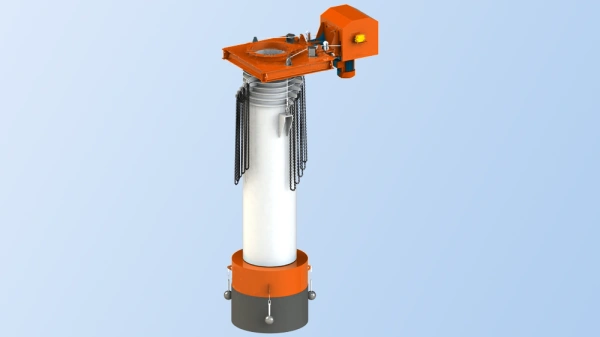
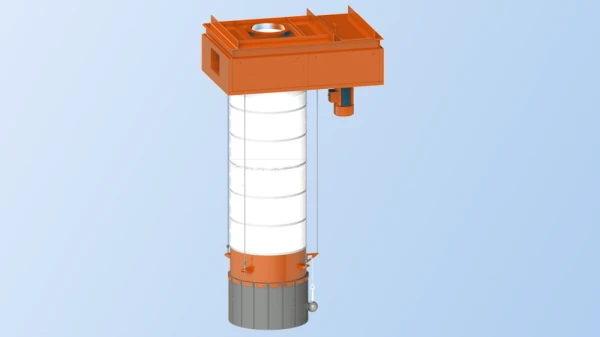
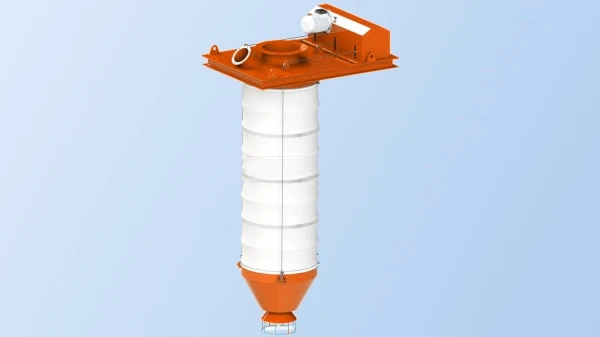
Cascade chutes are often combined with telescopic designs that extend close to the material pile.
This creates two important benefits:
- Minimal free-fall distance at the outlet
- Reduced impact when material reaches the pile
Together, these factors prevent the "puff" of dust that normally occurs when material hits the surface.
6. Improved Material Centering and Load Distribution
Another often overlooked benefit of cascade chutes is material centering.
The internal geometry helps:
- Keep material flowing down the center of the chute
- Prevent material from striking the chute walls
- Distribute material more evenly in the truck or hold
Better distribution means less spillage and less rehandling—both of which can create additional dust.
7. Less Wear, Less Secondary Dust
High-impact loading not only creates dust—it also causes wear. As chute walls wear down, rough surfaces and damage create even more turbulence and dust.
By reducing impact energy, cascade chutes:
- Extend liner and chute life
- Maintain smooth internal surfaces
- Prevent secondary dust caused by abrasion
This makes dust control more consistent over the long term.
8. Ideal Materials for Cascade Chutes
Cascade chutes work especially well for:
- Cement and fly ash
- Coal
- Clinker
- Aggregates and sand
- Fertilizers and other dry bulk materials
They are commonly used in ports, cement plants, power stations, and bulk terminals where environmental regulations are strict.
Dust-free bulk material loading doesn't happen by accident—it comes from controlling both material movement and air movement. A cascade chute does exactly that by slowing material down, guiding it smoothly, and minimizing free fall.
The result is cleaner loading, safer working conditions, and lower maintenance costs. For operations that take dust control seriously, a well-designed cascade chute isn't just an option—it's one of the most effective solutions available.
- Environmental Benefits of Cascade Chutes in Bulk Material Handling
- Wear Resistant Design of Telescopic Chutes for Abrasive Materials
- How to Choose Chute Tube Material for Telescopic Chutes
- How Telescopic Chutes Reduce Material Degradation and Spillage
- Cascade Chute vs Free-Fall Telescopic Chute: Which Is Better for Dust Suppression
- Dust Control Solutions Using Telescopic Loading Chutes

Table of Contents

Leading Mobile Bulk Material Handling Equipment Manufacturer in China. A high-tech enterprise specializing in R&D and manufacturing of stacker conveyors, ship loaders, and bucket wheel reclaimers. We provide comprehensive mobile solutions, including mobile hopper feeders, truck unloaders (surface feeders), and transfer conveyors, alongside high-performance mobile crushing and screening plants for global bulk material processing.
How to Contact
- WhatsApp: +8617821512097
- E-mail: [email protected]
-
 Add: China

