
 REQUEST A QUOTE
 EN
 English

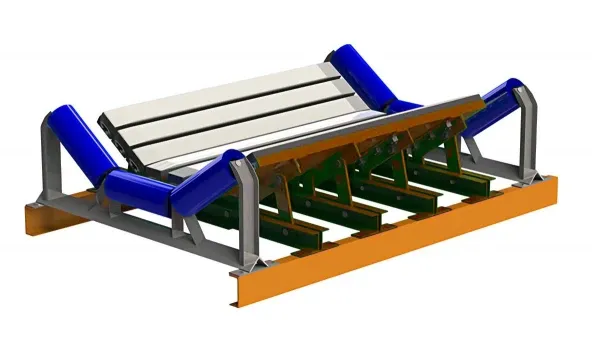
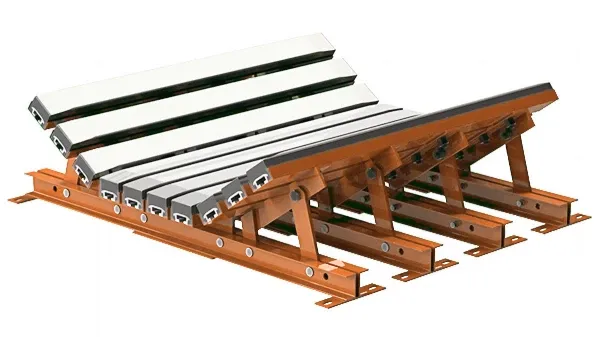
An belt conveyor impact bed is an essential component used in conveyor belt systems, particularly in heavy-duty applications such as mining, quarrying, and bulk material handling. It is designed to provide support and protection for the conveyor belt at loading points, where the impact from falling material can cause damage to the belt and conveyor structure. MMSTACKER is an impact bed manufacturer in China, and we can provide customizable impact beds for your belt conveyors.

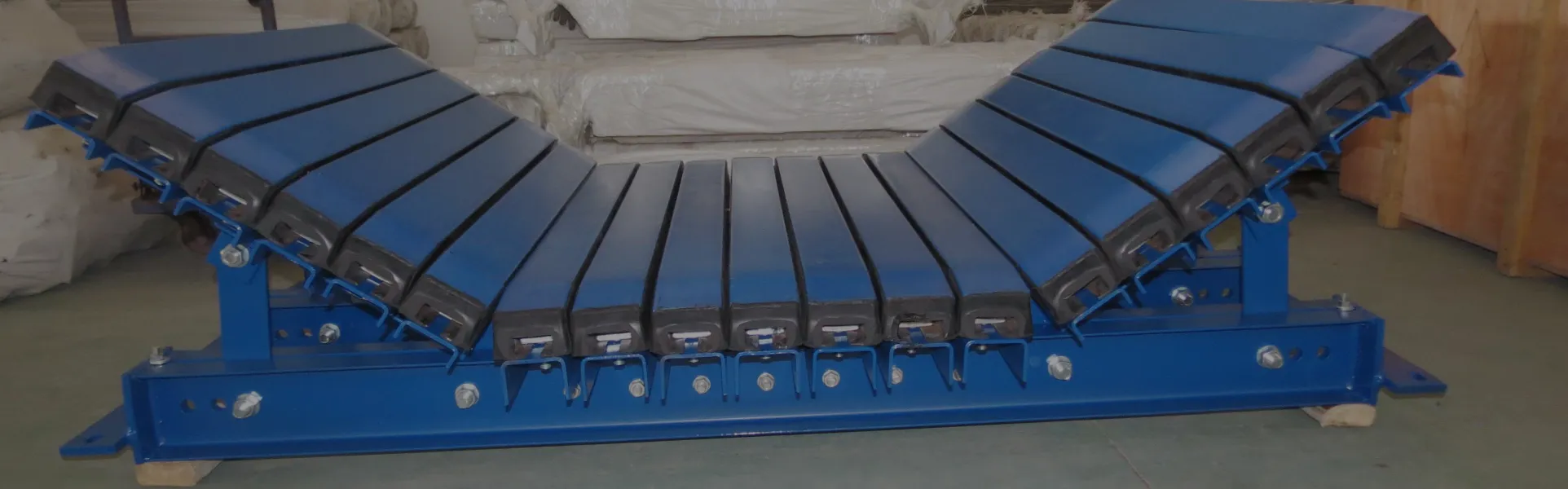
Impact Bed for Belt Conveyor
Discover Our Full Range of Impact Bed By Category
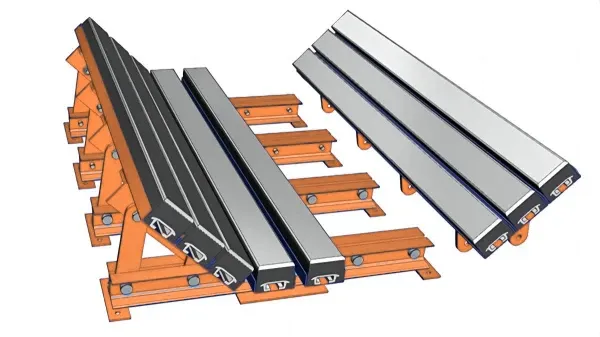
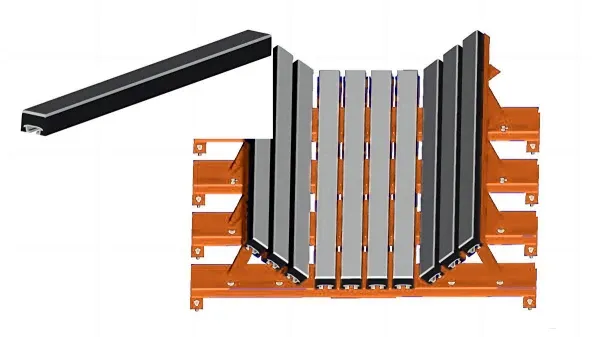
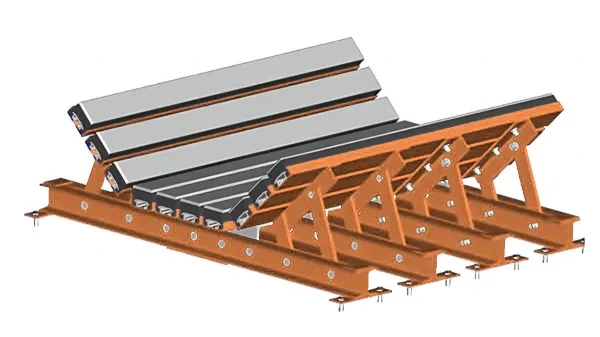
Impact Bars
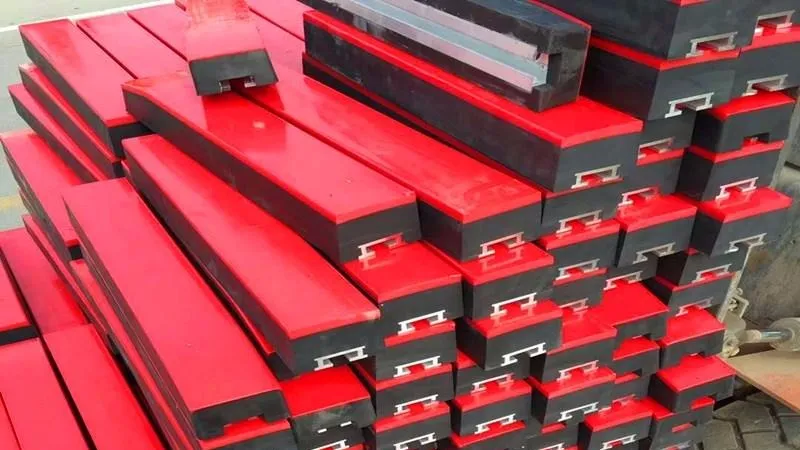
Bars made from a combination of rubber and UHMW polyethylene. These bars absorb the impact energy and provide a smooth surface for the conveyor belt to slide over.
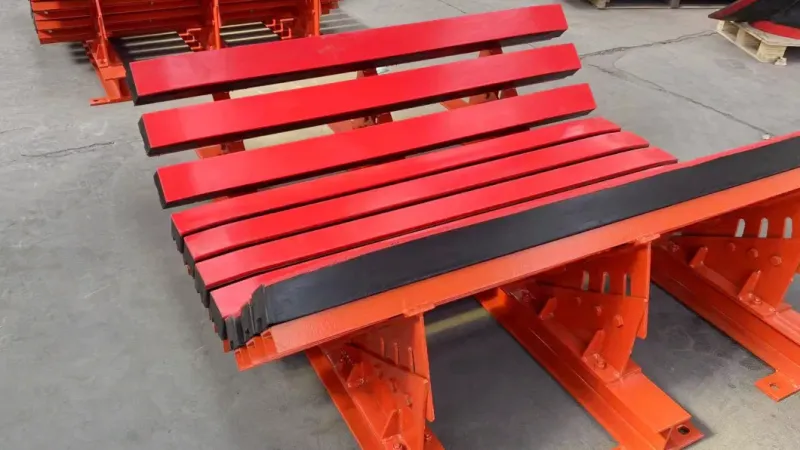
Impact Beds
Proper selection, installation, and maintenance of impact beds are essential for maximizing their benefits and ensuring the longevity of the conveyor system.
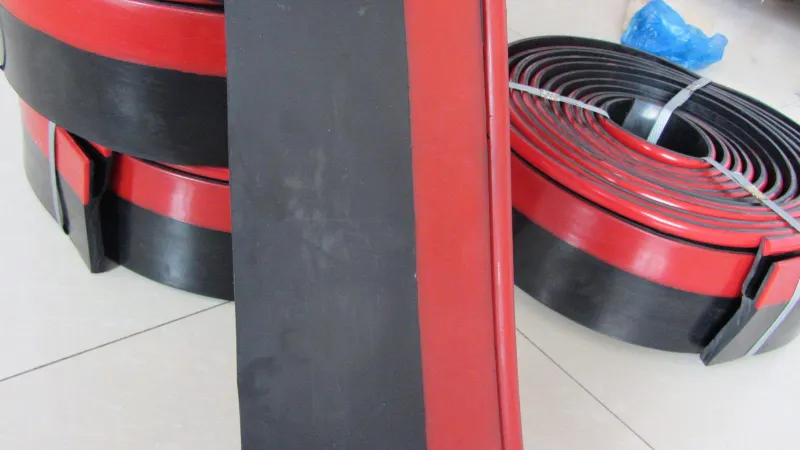
Skirting Rubber
Skirting system is often installed at loading point and working with impact rollers and impact beds. It is mainly used to efficiently contain spillage and control dust escaping.
What Should You Tell Our Engineers?
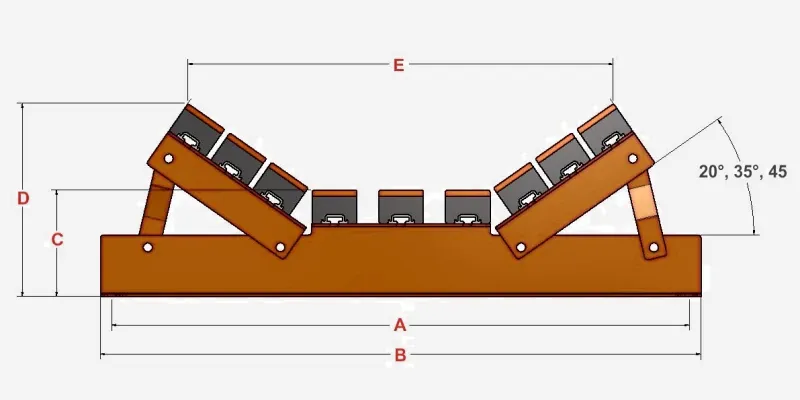
When we receive your quotation, we need some information to provide you a quote. These items are listed below.
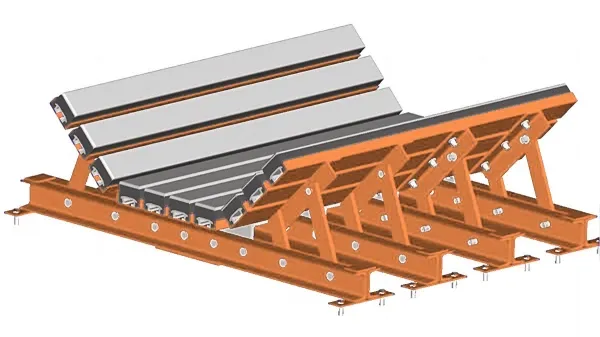
- A: Center Distance of Installation Holes.
- B: Beam Length
- C: From Bottom to The Lowest Surface to Support Conveyor Belt.
- D: Height of Impact Bed.
- E: Distance Between the Highest Point of Impact Bed.
- Angle: Trough Angle (similar to conveyor idler trough angle).
- Impact Bar: Rubber Impact Bar and Plastic Impact Bar (UHMW Impact Bar)
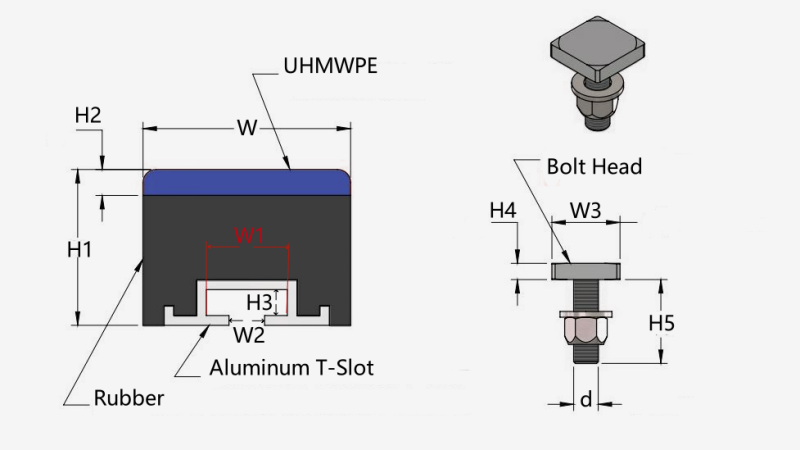
If you need impact bars, we need you provide dimensions of Impact Bars and Installation Bolt.
- H1: Height of Impact Bed Bars.
- H2: Thickness of Polyethylene (UHMW-PE) Layer.
- H3: T-Slot Inner Height.
- H4: Bolt Head Thickness.
- H5: Bolt Thread Length.
- W: Width of Impact Bed Bar.
- W1: Width of Space for Bolt Head.
- W2: T-Slot Hole Width.
- W3: Bolt Head Width.
- d: Diameter of Bolt Thread.
Conveyor Impact Bed Applications
Impact beds play a crucial role in protecting conveyor belts and enhancing the efficiency of material handling systems. Their ability to absorb shock, reduce maintenance costs, and improve safety makes them an indispensable component in industries such as:
- Mining,
- Quarrying,
- Construction,
- Port and Inland Terminal,
- Metallurgy,
- And More.
FAQ of Impact Beds for Bulk Material Belt Conveyors
1. What is a conveyor impact bed?
A conveyor impact bed is a support assembly installed beneath the conveyor belt at loading and transfer points. It absorbs impact energy from falling bulk materials and provides continuous support to help protect the belt from damage.
2. What are impact beds used for in bulk material handling?
Conveyor impact beds are used to protect conveyor belts at transfer chutes, loading zones, and material drop points. They are commonly used in mining, quarrying, aggregate processing, cement plants, ports, steel plants, and other heavy-duty bulk material handling applications.
3. What are the main benefits of using a conveyor impact bed?
A conveyor impact bed helps absorb impact forces, reduce belt damage, support the belt at loading points, and minimize maintenance caused by impact-related wear. It can also help reduce material spillage when used with a properly designed loading chute and skirting system.
4. What is the difference between an impact bed and impact idlers?
An impact bed uses a steel support frame and impact bars to provide continuous support beneath the belt. Impact idlers use rotating rollers, often fitted with rubber or polyurethane cushioning. Impact beds are often preferred where high impact forces and continuous belt support are required, while impact idlers may suit other loading conditions.
5. What types of conveyor impact beds are available?
Impact beds can be supplied in standard, heavy-duty, and application-specific configurations. Standard designs suit many conventional loading points, while heavy-duty designs are intended for more severe impact conditions, such as large material lumps or high drop heights. The final configuration should be selected according to the actual operating conditions.
6. What materials are used for conveyor impact bars?
Impact bars commonly combine a rubber cushioning layer with an upper UHMW-PE (ultra-high-molecular-weight polyethylene) sliding surface. The rubber absorbs impact energy, while the UHMW-PE layer provides a low-friction surface for the moving conveyor belt.
7. How do I choose the right impact bed for my conveyor?
Impact bed selection depends on belt width, trough angle, material bulk density, lump size, drop height, impact severity, conveyor speed, and loading rate. The conveyor frame and installation dimensions must also be considered to ensure proper fit and support.
8. Can impact beds handle large and abrasive materials?
Yes. Heavy-duty impact beds can be designed for demanding applications involving large or abrasive materials, including run-of-mine ore, crushed rock, and aggregates. The steel frame, impact bars, and mounting arrangement should be selected to withstand the expected impact loads and wear conditions.
9. Can impact beds help extend conveyor belt service life?
Yes. By absorbing impact energy and supporting the belt across the loading zone, an impact bed can reduce localized belt stress, cuts, punctures, and impact-related damage. Actual service-life improvements depend on material characteristics, drop height, loading conditions, and maintenance practices.
10. Can impact beds be used with conveyor skirting systems?
Yes. Conveyor impact beds are often installed together with rubber or polyurethane skirting at loading points. The impact bed supports the belt, while the skirting helps contain material and limit dust escaping from transfer areas. Correct alignment and adjustment are important for effective sealing.
11. Are conveyor impact bars replaceable?
Yes. Many impact bed designs use replaceable impact bars, allowing worn bars to be changed without replacing the entire steel frame. The replacement bars must match the original dimensions, fixing arrangement, T-slot profile, and bolt specifications.
12. How do I maintain a conveyor impact bed?
Inspect the impact bars for wear, cracks, loose fasteners, and damage to the sliding surface. Check the frame, mounting bolts, belt clearance, and surrounding skirting system regularly. Replace worn or damaged bars promptly and follow the manufacturer's maintenance recommendations.
Why to Choose Our Impact Beds?
-
Enhanced Belt Life
By reducing impact and minimizing belt damage, impact beds help to extend the service life of conveyor belts.
-
Improved Safety
Impact bed provides a more stable and secure loading area, reducing the risk of accidents and material spillage.
-
Lower Maintenance Costs
Reduces wear and tear on the belt and conveyor components, leading to lower maintenance and replacement costs.
-
Increased Efficiency
Helps to maintain a consistent and smooth flow of material, improving overall conveyor efficiency.
-
Durability
Impact bed is made from robust materials such as rubber, UHMW (Ultra-High Molecular Weight) polyethylene, and steel to withstand harsh conditions and heavy loads.
-
Ease of Installation
Typically designed for easy installation and maintenance, minimizing downtime and operational disruption.
-
Versatility
Available in various sizes and configurations to suit different conveyor systems and material handling requirements.
Contact Us for Quotes and Prices!
Just let we know what you want, and we will get in touch with you as soon as possible!

Leading Mobile Bulk Material Handling Equipment Manufacturer in China. A high-tech enterprise specializing in R&D and manufacturing of stacker conveyors, ship loaders, and bucket wheel reclaimers. We provide comprehensive mobile solutions, including mobile hopper feeders, truck unloaders (surface feeders), and transfer conveyors, alongside high-performance mobile crushing and screening plants for global bulk material processing.
How to Contact
- WhatsApp: +8617821512097
- E-mail: [email protected]
-
 Add: China

