
 REQUEST A QUOTE
 EN
 English

MMSTACKER is a professional manufacturer of mobile eco hoppers designed for the efficient and dust-free unloading of dry bulk materials. Our eco-friendly port hoppers provide a flexible, cost-effective solution for transferring materials from grab cranes to trucks or conveyors. By integrating advanced dust suppression systems, we help port terminals meet strict environmental regulations while maximizing throughput for coal, cement, clinker, grain, and ores.

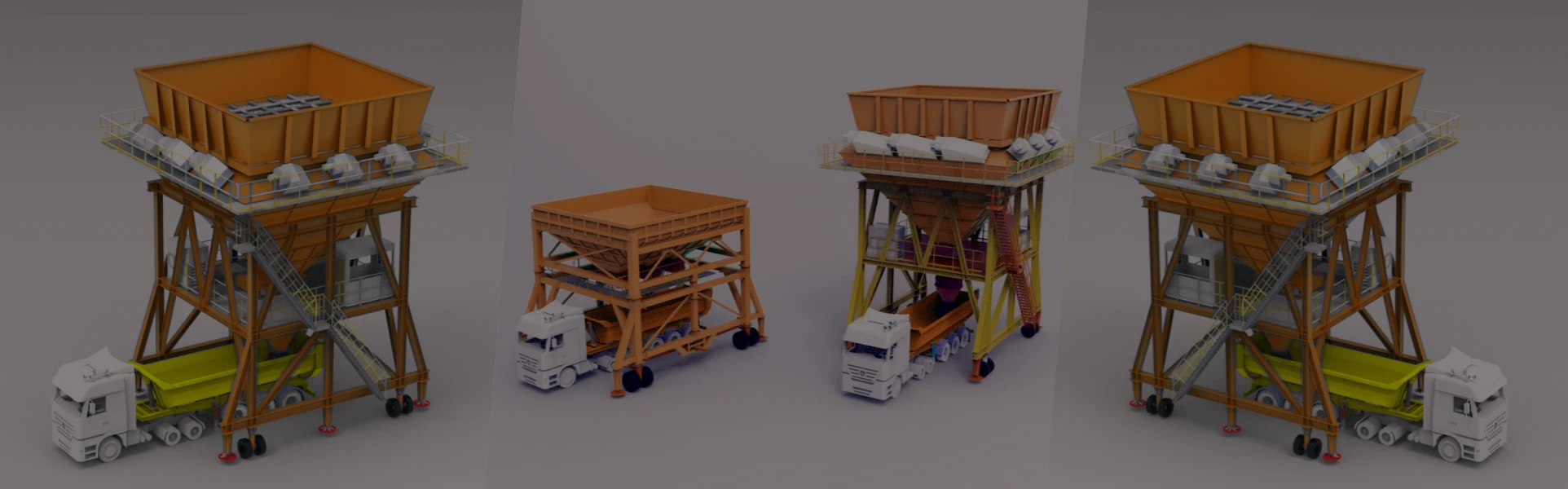
Mobile Hopper & Eco Hopper | Ship Unloading
Discover Our Full Range of Mobile Hopper By Category
-

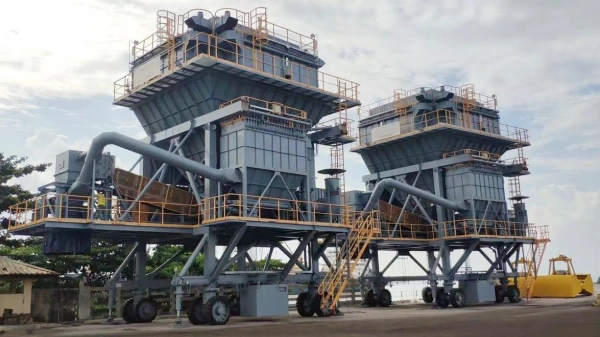
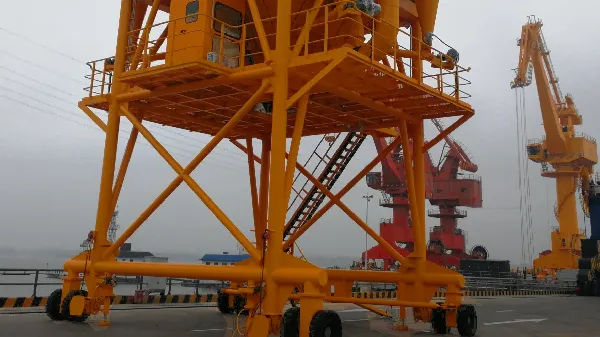
Tyre Mounted Mobile ECO Hopper
Send A RequestOffers maximum flexibility for rapid relocation across port berths. Featuring customizable tyre specifications, this mobile unit adapts to various ground conditions and high-mobility operational needs.
-
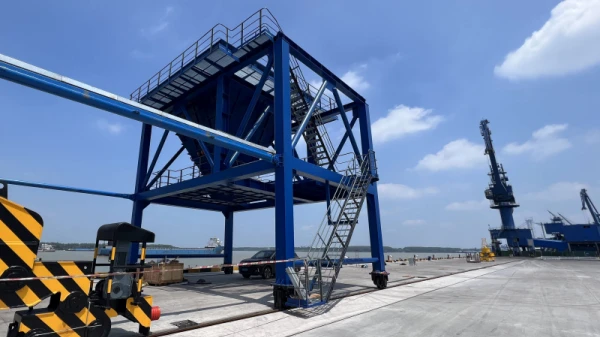
Rail-mounted Mobile Hopper
Send A RequestBuilt for high-stability operations along dedicated terminal tracks. It ensures precise alignment with conveyors and superior load-bearing performance for heavy-duty, fixed-path unloading.
-
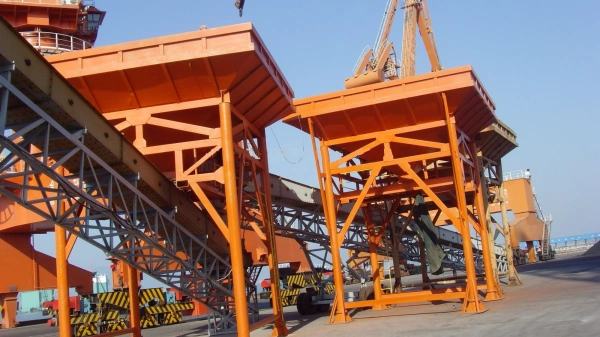
Fixed Installed Port Hopper
Send A RequestA robust, cost-effective solution for dedicated berths with fixed unloading points. Engineered for long-term durability and high-frequency use where mobility is not required.
Video

Mobile Hopper Applications
Mobile hoppers can handle a wide variety of bulk materials, from grains and fertilizers to coal and aggregates, making them highly versatile for different industries. Their ability to manage different cargo types ensures that ports can handle various shipments with minimal equipment changes.
1. Unloading Agriculture Goods
Unload grains and other agricultural products from ships at bulk handling terminals.
2. Unloading Bulk Minerals
In the coal and mining industries, mobile hoppers facilitate the unloading of coal, ores, and minerals from ships.
3. Unloading Construction Materials
Unload building materials like cement, sand, and gravel from ships, helping construction companies streamline their supply chain.
4. Handling Other Materials
Handling fertilizers, chemicals, and other fine bulk materials.
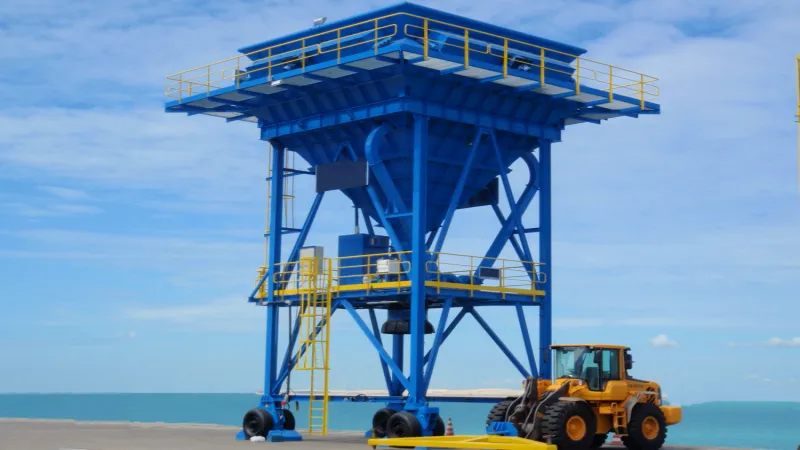
Mobile Eco Hopper With Dust Collector
Equipped with integrated bag filters to meet strict environmental regulations. Specially designed for powders and dusty bulk materials, it captures 99% of fugitive dust while maintaining high throughput.
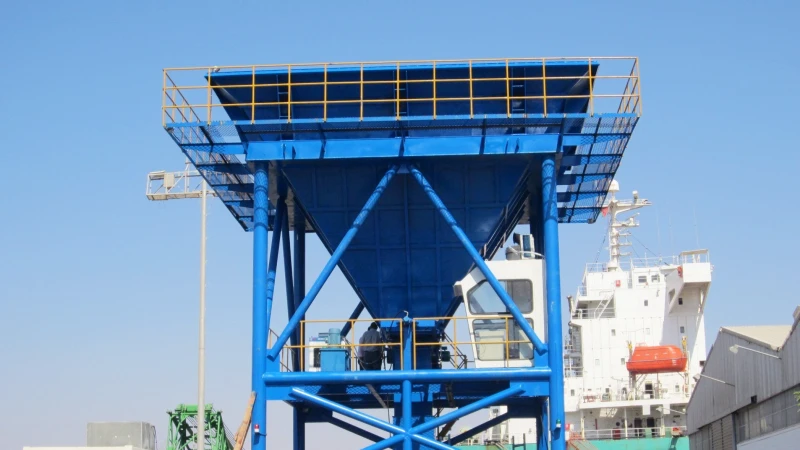
Normal Mobile Hopper for Ship Unloading
A high-ROI solution for materials not requiring dust suppression. It provides the same structural durability as Eco models but at a lower initial investment for standard environmental zones.
Mobile Hoppers Types
The mobile hopper acts like a funnel, allowing the grab ship unloader to discharge its load into a wide opening hopper. And it can be specially designed to contain dust as the material falls, minimizing environmental impact from emissions. This kind of mobile hopper equipped with a dust removal system is also called Eco Hopper.
Common Types of Mobile Hoppers
- Fixed Mobile Hopper
- Rail-mounted Mobile Hopper
- Tyre-mounted Mobile Hopper
- Dust Removal Mobile Hopper ( Eco Hopper )

Mobile Eco Hopper for Ship Unloading Via Grab Ship Unloader
Installation Types of Mobile Hopper
We offer a wide variety of mobile hopper designs, and full customization will accommodate even the most unique operations. We offer hoppers in various installation methods.
- Fixed (stationary) installations
- Rail-mounted
- Rubber-tire mounted
- Manual movement (towing)
- Self-powered
Our receiving hoppers feature industry-proven technology that adapts to the different characteristics of dry bulk materials, from rough and abrasive cargoes to powdery cargoes, and sets new standards for terminal hoppers. According to customer needs, we can provide Eco hoppers. The through put of the terminal can be increased by just adding one or more mobile hoppers, provided the collecting belt conveyor and the subsequent handling equipment are designed for future capacity increase with larger vessels.
Mobile Hopper Dust Removal Methods

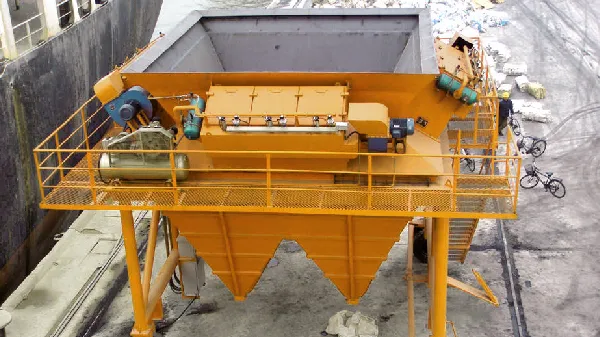
Mobile Eco Hopper With Bag Dust Collector
This negative pressure dust removal system, applicable species: cement clinker, grain, dried cassava, limestone, alumina and other species that can not get wet. Negative pressure dust collectors can efficiently absorb dust generated by materials released from the grab bucket and by materials impacting the hopper.

Mobile Port Hopper with Water Spray System
Water dusting system, applicable species: gravel, ore, coal and other material that are allowed to get into the water.We offer normal water spray system (single-fluid water dust removal) and dry fog dust removal (dual-fluid water dust removal, better than normal water spray).
Mobile Hopper Technical Parameters
| Hopper Models | Hopper Volume (m³) | Unloading Capacity (t/h) |
| MH40 | 40 | 300-600 |
| MH50 | 50 | 400-800 |
| MH60 | 60 | 500-1000 |
| MH70 | 70 | 600-1250 |
| MH80 | 80 | 800-1600 |
| MH90 | 100 | 1000-2000 |
| MH60D | 60 | 1250-2500 |
| MH70D | 70 | 1000-2000 |
| MH80D | 80 | 1250-2500 |
| MH100D | 100 | 1600-3200 |
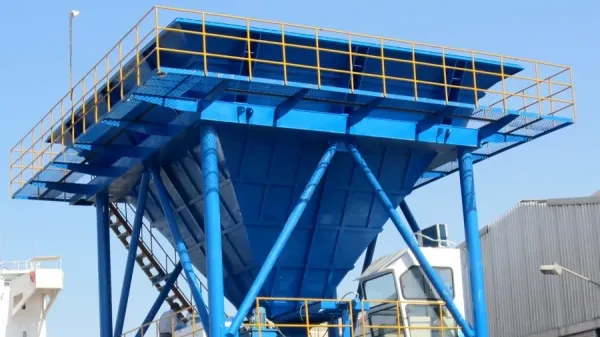
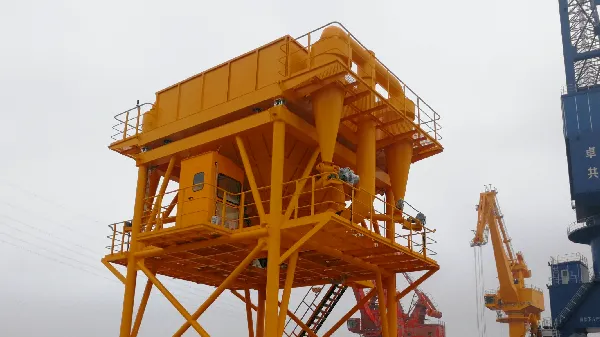
FAQ About Mobile Hoppers and Eco Hoppers
1. What is a mobile hopper for ship unloading?
A mobile hopper for ship unloading is a bulk material handling unit designed to receive materials discharged from ships by grab cranes or other unloading equipment. It temporarily stores the material and transfers it to trucks, belt conveyors, or downstream handling systems. Mobile hoppers are commonly used in ports handling coal, iron ore, aggregates, fertilizer, grain, and other dry bulk materials.
2. What is an Eco Hopper?
An Eco Hopper is an environmentally focused port hopper designed to receive bulk materials during ship unloading while reducing dust emissions and material spillage. Depending on its design, it may incorporate dust extraction, filtration, enclosed transfer sections, flexible sealing systems, and controlled discharge equipment.
3. What is the difference between a mobile hopper and an Eco Hopper?
A conventional mobile hopper mainly provides flexible material receiving, buffering, and transfer. An Eco Hopper places additional emphasis on dust containment and environmental protection, often incorporating an integrated dust suppression or extraction system.
A mobile hopper can also be designed as an Eco Hopper, combining mobility with dust control features. The best configuration depends on cargo properties, port regulations, unloading capacity, and site conditions.
4. What materials can a mobile ship unloading hopper handle?
Mobile hoppers can be configured for a wide range of dry bulk materials, including:
- Coal and coke
- Iron ore and mineral concentrates
- Limestone and aggregates
- Cement and clinker
- Fertilizer
- Grain and other agricultural products
- Other industrial bulk materials
The hopper design, liner material, discharge system, and dust control method should be selected according to material density, particle size, moisture content, abrasiveness, and flow characteristics.
5. How does an Eco Hopper reduce dust during ship unloading?
An Eco Hopper can reduce dust through a combination of enclosed receiving areas, flexible sealing curtains, dust extraction and filtration, and controlled material discharge. Some applications may also use water mist or other dust suppression methods where suitable.
The required system depends on the cargo. Fine, dry, dusty materials generally require more effective containment and extraction than coarse, low-dust materials.
6. What dust control systems are available for Eco Hoppers?
Common options include bag filters, cartridge filters, extraction fans, enclosed transfer points, sealing curtains, and material-specific dust suppression systems. The system should be designed around the expected dust load, airflow requirements, cargo properties, and applicable environmental standards.
7. What is the typical capacity of a mobile hopper for ship unloading?
Mobile hopper capacity varies by design and application. The required capacity should be determined by the grab size, crane unloading cycle, peak material discharge rate, and the capacity of the downstream conveyor or truck loading system.
Both hopper storage volume and continuous discharge capacity must be considered to prevent overflow or bottlenecks during ship unloading.
8. How does a mobile hopper transfer material to trucks or conveyors?
A mobile hopper typically uses a controlled discharge system, such as a belt feeder, vibrating feeder, or another suitable feeding arrangement. Material can then be transferred to trucks, mobile conveyors, fixed belt conveyors, or other downstream equipment.
The discharge design should match the material's flow properties and the receiving equipment's required capacity.
9. Can a mobile hopper be moved between different berths?
Yes. Depending on its configuration, a mobile hopper may use wheels, rail-mounted travel, or other engineered mobility systems. Mobility allows the hopper to serve different unloading positions and cargo handling operations.
The selection should consider berth layout, ground or rail conditions, relocation frequency, utility connections, and the available movement route.
10. What is the difference between a mobile hopper and a fixed hopper?
A mobile hopper can be relocated between designated working areas, providing greater flexibility for multi-berth or multi-cargo operations. A fixed hopper is installed at a permanent position and may be suitable for facilities with stable, high-volume material flow.
Mobile equipment can reduce dependence on multiple fixed receiving points, but the overall cost advantage depends on utilization, relocation requirements, and site infrastructure.
11. Can an Eco Hopper be used for coal and iron ore unloading?
Yes. Eco Hoppers can be designed for coal, iron ore, and other mineral bulk materials. Coal handling often requires particular attention to dust, fire risk, and material characteristics, while abrasive ores may require wear-resistant liners and heavy-duty discharge components.
The hopper and dust control system must be engineered for the specific cargo and operating conditions.
12. Can an Eco Hopper handle grain and fertilizer?
Yes, provided that the hopper is designed for the relevant cargo. Grain handling may require attention to contamination prevention, product integrity, and food-grade requirements where applicable. Fertilizer selection should account for corrosion, moisture sensitivity, dust, and material flow characteristics.
13. How do I choose the right mobile hopper or Eco Hopper?
Key selection factors include:
- Cargo type, density, moisture, and particle size
- Required ship unloading rate
- Grab bucket capacity and discharge pattern
- Hopper volume and discharge capacity
- Dust emission control requirements
- Truck or conveyor interface
- Mobility and berth layout
- Corrosion and wear protection
- Maintenance access and operating conditions
The hopper, feeder, dust control system, and downstream conveyor should be evaluated as one integrated ship unloading system.
14. Can a mobile Eco Hopper work with a mobile conveyor?
Yes. A mobile Eco Hopper can be integrated with a mobile belt conveyor system to transfer bulk material from the ship unloading area to stockpiles, storage facilities, or other conveying equipment. The interface should be designed to match conveyor capacity, discharge height, transfer-point geometry, and dust containment requirements.
15. What information is needed to design a mobile hopper for a port?
To select a suitable mobile hopper or Eco Hopper, provide the cargo type, required unloading capacity in tonnes per hour, grab bucket volume, target dust control level, discharge method, truck or conveyor requirements, berth layout, mobility requirements, and local environmental regulations.
This information helps determine hopper volume, feeder configuration, dust extraction capacity, structural design, and mobility system.
Why to Choose Our Mobile Hoppers?
-
High Movable Design for Easy Operation
Our mobile hopper can be rubber-tire mounted or rail-mounted or self-powered. It can move around dock of port easily.
-
High Bulk Material Unloading Capacity
Temporary storage volume ranges from 40m³ to 100m³. The ship's unloading capacity ranges from 300t/h to 3200t/h.
-
Dust Collection for Environment Protection
There are two options for the collection of dust produced during ship unloading. Our eco hoppers feature a ducted dust filter chamber and recycling bin.
-
Telescopic Loading Spouts Available
Our mobile hopper can be equipped with telescopic chute to decrease the dust produced during loading trucks or feeding conveyors.
-
Need Less Operational Costs
By reducing the need for manual labor and minimizing the number of material transfers, mobile hoppers help lower operational costs.
Contact Us for Quotes and Prices!
Just let we know what you want, and we will get in touch with you as soon as possible!

Leading Mobile Bulk Material Handling Equipment Manufacturer in China. A high-tech enterprise specializing in R&D and manufacturing of stacker conveyors, ship loaders, and bucket wheel reclaimers. We provide comprehensive mobile solutions, including mobile hopper feeders, truck unloaders (surface feeders), and transfer conveyors, alongside high-performance mobile crushing and screening plants for global bulk material processing.
How to Contact
- WhatsApp: +8617821512097
- E-mail: [email protected]
-
 Add: China

