
 REQUEST A QUOTE
 EN
 English

MMSTACKER provides a comprehensive range of bulk ship unloaders engineered to optimize terminal productivity. From high-capacity grab ship unloaders to continuous ship unloading systems, our equipment handles diverse dry bulk materials including coal, iron ore, cement, grain and more. We combine robust structural design with intelligent control systems to ensure rapid discharge and minimal environmental impact.

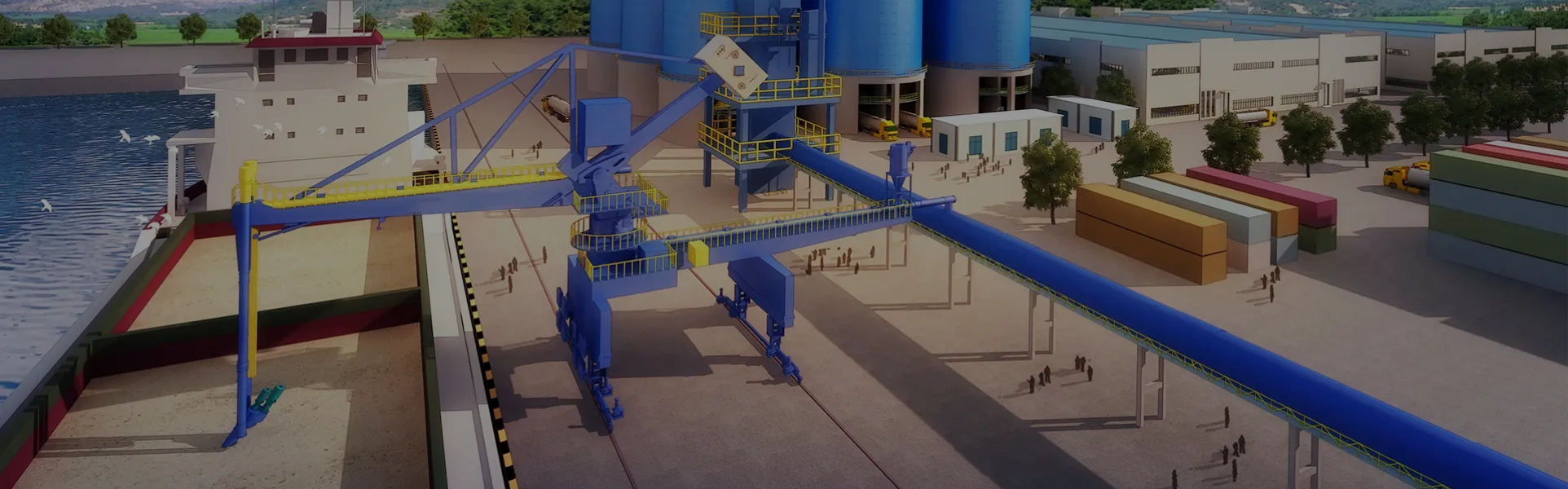
Ship Unloaders - Continuous & Grab Type Solutions
Discover Our Full Range of Ship Unloader By Category
-
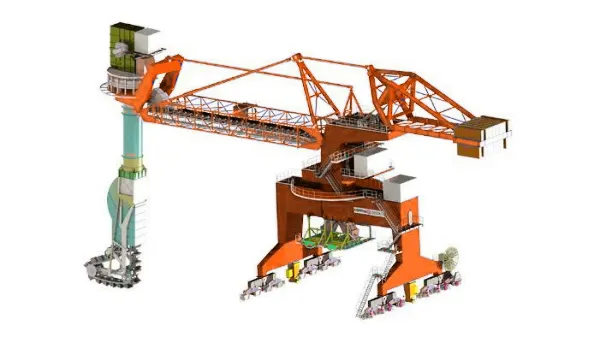
Chain Bucket Ship Unloader- High Throughput Port
View More Send A RequestAs a high-efficiency continuous ship unloader (CSU), this system utilizes a continuous loop of buckets to scoop and lift bulk materials directly from the ship's hold. With a massive capacity of up to 3,000 t/h, it provides a constant, high-volume flow to conveyor systems, making it ideal for large-scale terminal operations.
-
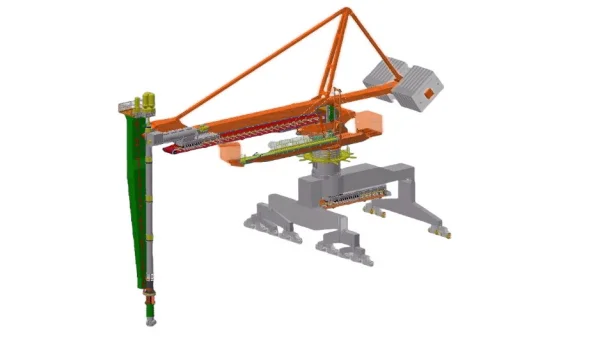
Screw Ship Unloader - Automatic and Dust-Free
View More Send A RequestUtilizing an Archimedes screw (auger) mechanism, this unloader ensures the efficient and dust-free extraction of dry bulk solids. Supporting vessels from 500 DWT to 70,000 DWT with capacities up to 1,500 t/h, it is the premier choice for handling cement, grain, and fertilizer while maintaining a steady discharge rate.
-
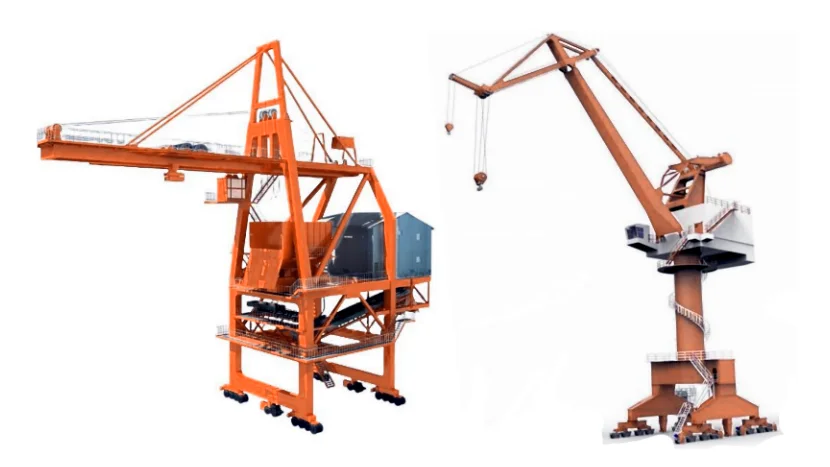
Grab Ship Unloader - Wide Material Range
View More Send A RequestThis cycle-based unloader uses high-performance clamshell grabs to handle bulk materials with lump sizes up to 300mm. It is engineered to discharge materials directly into mobile hoppers or Eco-hoppers, achieving a high unloading capacity of 2,500 t/h for diverse cargo like coal and iron ore.
Video

What Are The Applications of Ship Unloaders?
Ship unloaders are essential pieces of equipment in the logistics chain for handling bulk materials. Their ability to handle different types of materials and their high efficiency make them indispensable in modern bulk material handling operations. Whether in ports, power plants, steel mills, or other industrial applications, ship unloaders play a vital role in ensuring the smooth and cost-effective unloading of bulk cargo.
- Ports and Terminals: Unloading bulk cargo such as coal, iron ore, grains, fertilizers, cement, and more.
- Grain: Handling bulk grains like soybeans, corn, wheat, soybeans, etc.
- Wood: Handling bulk wood products like saw dust and wood chips.
- Power: Handling bulk fuels like coal delivered by ship.
- Steel: Unloading raw materials like iron ore, coal, coke, etc.
- Cement: Handling bulk cement, clinker and other raw materials.
- Others
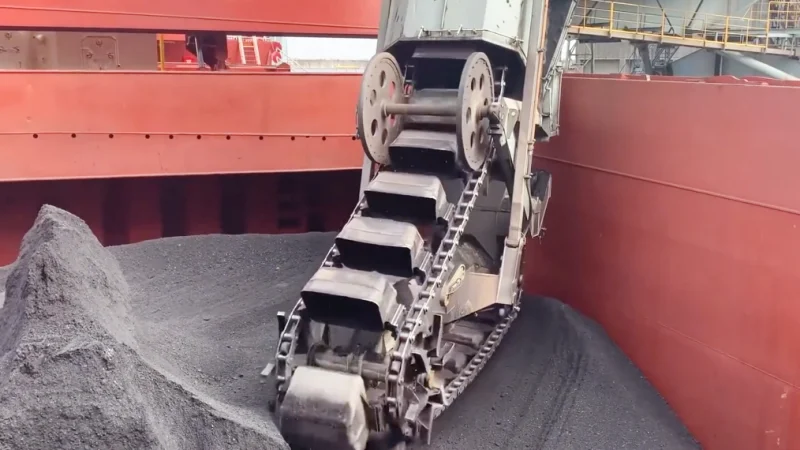
Chain Bucket Ship Unloader
It, a type of continuous ship unloader, operates using a continuous loop of buckets attached to a chain mechanism, which scoops up the material and transports it to a discharge point.
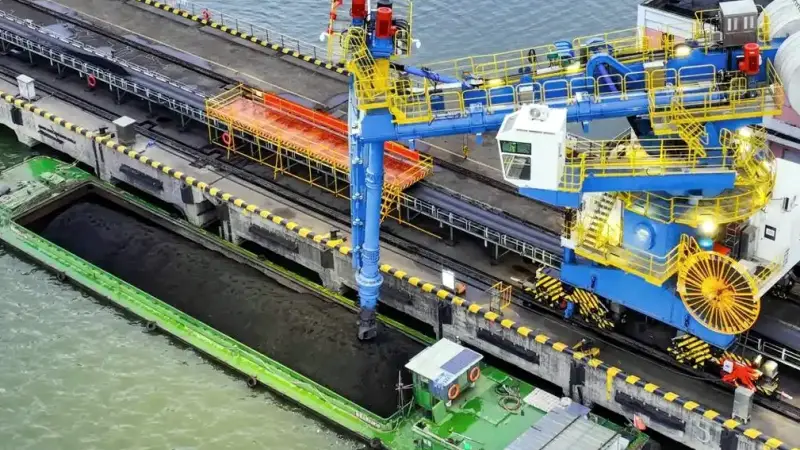
Screw Ship Unloader
It, a type of continuous ship unloader, uses an archimedes screw (auger) mechanism to extract material from the ship’s hold and transfer it to a conveyor system.
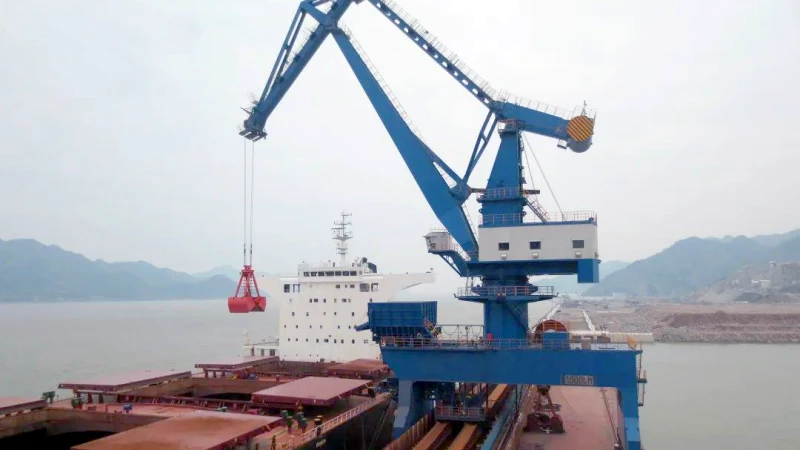
Grab Bucket Ship Unloader Crane
It operates in cycles, scooping material with bucket grab and transferring it into a mobile hopper or Eco-hopper to load conveyor or trucks.
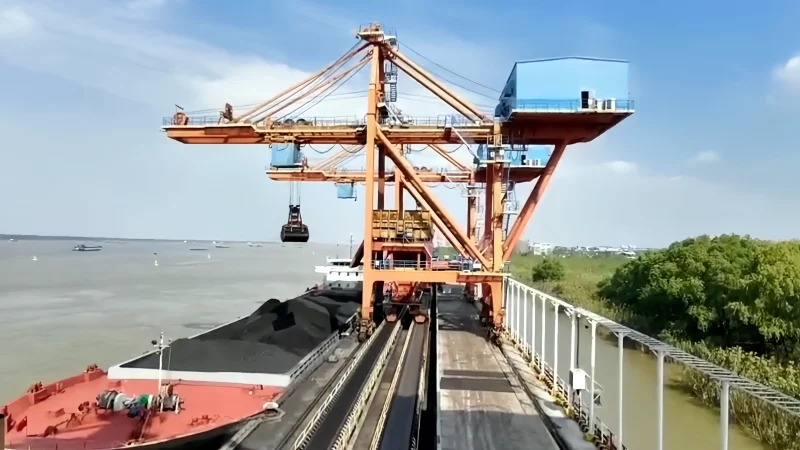
Bridge Grab Bucket Ship Unloader
It combines the mobility of a bridge structure with the versatility of a clamshell grab bucket, offering high throughput, precision, and automation capabilities.
Specifications of Bulk Material Ship Unloaders
| Feature | Grab Unloader | Chain Bucket | Screw Unloader |
| Max Capacity (TPH) | 3,000+ | 6,000+ | 2,000+ |
| Material Size | Lumps (up to 1m) | <300 mm | <50 mm |
| Dust Emission | Moderate | Low | Very Low |
| Energy Use | Medium | High | Medium |
| Automation | High | High | Medium |
| Maintenance | Moderate | High | Moderate |
| Customization | Yes | Yes | Yes |
| Material Suitability | Coal, iron ore, grain, aggregates and more. | Coal, grain, cement, fertilizers and more. | Grain, cement, fly ash, fertilizers and more. |
FAQof Ship Unloaders for Bulk Material Handling
1. What is a ship unloader for bulk materials?
A ship unloader is a material handling machine designed to transfer dry bulk cargo from a ship's hold to a shore-based receiving or conveying system. Depending on the design, it may use grabs, screws, chains and buckets, or other mechanical conveying mechanisms.
2. What types of ship unloaders are available?
Common types include grab ship unloaders, chain bucket ship unloaders, screw ship unloaders, and bridge-type grab ship unloaders. Grab systems handle cargo in batches, while continuous mechanical ship unloaders are designed to maintain a more continuous flow of material.
3. What is the difference between a grab ship unloader and a continuous ship unloader?
A grab ship unloader uses a clamshell grab to pick up material and discharge it into a hopper. A continuous ship unloader extracts and transfers material through a continuous mechanical process. The best choice depends on required unloading capacity, cargo characteristics, environmental requirements, and operating costs.
4. What materials can a bulk ship unloader handle?
Ship unloaders can be designed for coal, iron ore, limestone, aggregates, grain, cement, clinker, fertilizers, fly ash, wood chips, and other dry bulk materials. The appropriate unloading mechanism depends on particle size, abrasiveness, moisture content, flowability, and material density.
5. How do I choose the right ship unloader for my cargo?
Consider the material type, bulk density, maximum lump size, moisture content, required unloading rate, vessel dimensions, and available shore-side infrastructure. Dust-control requirements, operating hours, maintenance resources, and the total cost of ownership should also be evaluated.
6. What unloading capacity can a ship unloader achieve?
Ship unloader capacity varies by equipment type, model, cargo, vessel conditions, and the downstream conveying system. High-capacity systems can handle thousands of tonnes per hour, but actual operating throughput should be confirmed through project-specific engineering calculations.
7. Which ship unloader is best for grain and other free-flowing materials?
Screw ship unloaders and chain bucket ship unloaders may be suitable for grain and other free-flowing dry bulk materials. Selection depends on the grain type, required throughput, product handling requirements, dust control, and the configuration of the receiving system.
8. Which ship unloader is suitable for coal and iron ore?
Grab ship unloaders are versatile options for coal and iron ore, particularly where cargo sizes and vessel requirements vary. Chain bucket or other continuous mechanical unloaders may be suitable for projects requiring a more continuous material flow. The final choice depends on cargo properties and project capacity requirements.
9. Can a ship unloader handle large or abrasive material lumps?
Yes, certain grab ship unloaders and heavy-duty mechanical systems can be designed for coarse and abrasive materials. Maximum lump size, impact loads, wear protection, grab capacity, and material flow characteristics must be checked before selecting the equipment.
10. How does a ship unloader connect to a belt conveyor system?
A ship unloader can discharge material into a receiving hopper, feeder, or directly integrated conveying arrangement, depending on its design. Belt conveyors then transfer the material to stockyards, storage facilities, processing plants, or onward transportation systems. The transfer points must be designed for the required flow rate and material characteristics.
11. How can dust emissions be reduced during ship unloading?
Dust emissions can be reduced through enclosed transfer points, suitable hoppers, dust extraction or suppression systems, and appropriate chute and sealing designs. Enclosed mechanical unloading systems may be particularly suitable for dusty materials, but actual performance depends on the cargo and the complete system design.
12. Can ship unloaders accommodate different vessel sizes?
Yes. Ship unloaders can be engineered for different vessel sizes and operating conditions. Important design parameters include vessel deadweight tonnage (DWT), hatch dimensions, hold depth, berth geometry, reach requirements, and the range of vessel types expected at the terminal.
13. What maintenance is required for a ship unloader?
Routine maintenance includes inspecting mechanical drives, motors, gearboxes, bearings, chains or screws, grab mechanisms, wear components, safety devices, and dust-control equipment. Inspection frequency depends on operating intensity, material abrasiveness, environmental conditions, and the manufacturer's maintenance schedule.
14. Can ship unloaders be customized for specific ports and terminals?
Yes. Ship unloaders can be customized according to required capacity, vessel dimensions, cargo properties, berth layout, conveying arrangements, automation level, and environmental requirements. Project-specific engineering helps ensure the equipment fits the terminal's operating conditions.
15. What information is required to get a ship unloader quotation?
For an initial quotation, provide the cargo type, bulk density, maximum lump size, target unloading capacity in tonnes per hour, vessel DWT and dimensions, hold depth, berth layout, and downstream conveying arrangement. Also specify dust-control requirements, available utilities, operating hours, and any applicable project standards. General arrangement drawings and vessel data are helpful for a more accurate proposal.
Why to Invest Our Ship Unloaders?
-
HHigh Efficiency
Capable of unloading large quantities of material quickly, reducing ship turnaround times.
-
Versatility
Our ship unloader is suitable for a wide range of bulk materials and different types of ships.
-
Durability
Built to withstand harsh marine environments and the abrasive nature of bulk materials.
-
Safety
Our ship unloaders are equipped with safety features to protect operators and reduce the risk of accidents.
-
Environmental Control
Options for dust control and environmentally friendly operations.
Contact Us for Quotes and Prices!
Just let we know what you want, and we will get in touch with you as soon as possible!

Leading Mobile Bulk Material Handling Equipment Manufacturer in China. A high-tech enterprise specializing in R&D and manufacturing of stacker conveyors, ship loaders, and bucket wheel reclaimers. We provide comprehensive mobile solutions, including mobile hopper feeders, truck unloaders (surface feeders), and transfer conveyors, alongside high-performance mobile crushing and screening plants for global bulk material processing.
How to Contact
- WhatsApp: +8617821512097
- E-mail: [email protected]
-
 Add: China

