
 REQUEST A QUOTE
 EN
EN English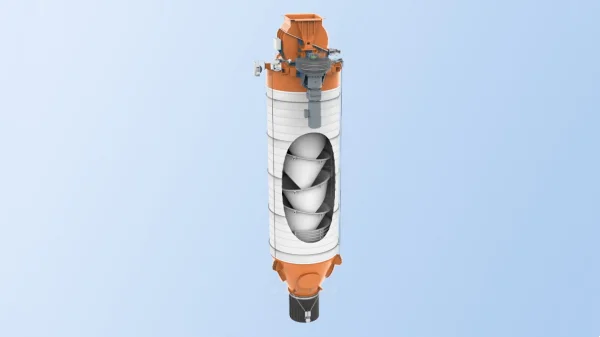
Just let we know what you want, and we will get in touch with you as soon as possible!

Cascade Chute vs Free-Fall Telescopic Chute: Which Is Better for Dust Suppression
Dust control is one of the biggest challenges in bulk material loading. Anyone who has worked around cement, coal, fly ash, or fine aggregates knows how quickly dust can spread during loading—and how difficult it is to manage once it's in the air.
When choosing a telescopic loading chute, one common question comes up early in the decision process: Should you use a cascade chute or a free-fall telescopic chute? Both designs have their place, but when it comes to dust suppression, the difference between the two is significant.

Let's take a practical look at how they work and which one performs better in real operating conditions.
Understanding the Free-Fall Telescopic Chute
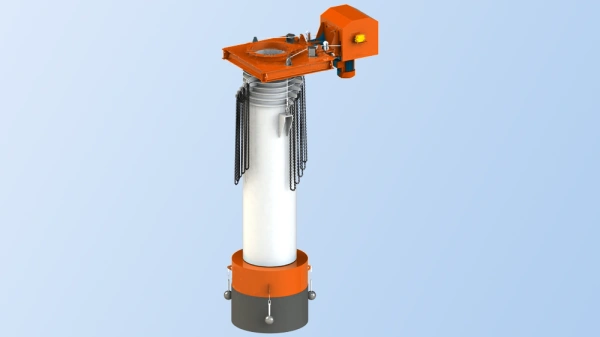
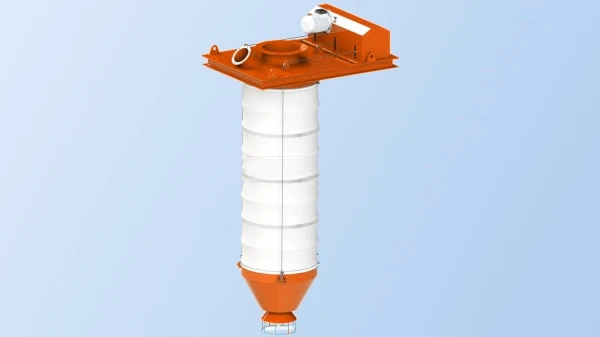
A free-fall telescopic chute is the simpler of the two designs. Material drops vertically through the chute and exits near the bottom, reducing the drop height compared to an open conveyor discharge.
Because the chute extends down toward the truck, wagon, or ship hold, free-fall designs already offer better dust control than open loading. They are widely used because they are:
- Simple in construction
- Cost-effective
- Easy to maintain
For coarse materials with low dust content, such as large aggregates or crushed stone, this design can be perfectly adequate.
However, free-fall chutes still allow material to accelerate under gravity. As speed increases, fine particles separate from the main stream and become airborne, especially when material hits the pile below.
How Cascade telescopic chutes Work Differently
A cascade telescopic chute takes a more controlled approach. Instead of letting material drop straight down, it guides the material along a series of inclined steps or a spiral flow path inside the chute.
As the material moves downward:
- Its speed is reduced at each stage
- Impact energy is absorbed gradually
- A continuous material column is maintained
This controlled flow dramatically reduces air turbulence inside the chute, which is one of the main causes of dust generation.
Dust Suppression: The Key Difference
The biggest advantage of cascade chutes lies in how they handle air movement. Dust is not only about fine particles—it’s also about air being pulled through the system.
In a free-fall chute:
- Material falls quickly
- Air is drawn down and then pushed out at the discharge point
- Dust escapes when material hits the pile
In a cascade chute:
- Material flows smoothly along surfaces
- Air pockets are minimized
- Less air is expelled at the bottom
The result is significantly lower dust emission, even without aggressive dust extraction systems.

Material Type Makes a Big Difference
The choice between cascade and free-fall designs often comes down to the material being handled.
- Cement, fly ash, and fine powders
Cascade chutes are clearly superior. Free-fall designs struggle to control dust in these applications. - Coal and clinker
Cascade chutes reduce dust and material degradation, especially at high loading rates. - Coarse aggregates
Free-fall chutes may be acceptable if dust levels are low and environmental requirements are less strict.
In ports, cement plants, and export terminals, cascade chutes are increasingly seen as the safer long-term option.
Wear, Maintenance, and Operating Costs
Dust suppression isn't the only factor to consider. Wear and maintenance also play a role.
Free-fall chutes:- Experience higher impact at the discharge point
- Concentrate wear in a smaller area
- May require more frequent liner replacement
Cascade chutes:
- Distribute wear along the flow path
- Reduce impact forces
- Often achieve longer service life with proper liners
Although cascade chutes typically have a higher initial cost, many operators find that lower maintenance and cleaner operation offset the investment over time.
Environmental and Regulatory Considerations
Environmental regulations are becoming stricter across many industries. Visible dust emissions are often unacceptable, especially in ports and urban areas.
Cascade telescopic chutes make it easier to:
- Meet dust emission limits
- Reduce reliance on large dust collectors
- Maintain cleaner working environments
For operations facing regulatory pressure, cascade chutes are often the safer choice.

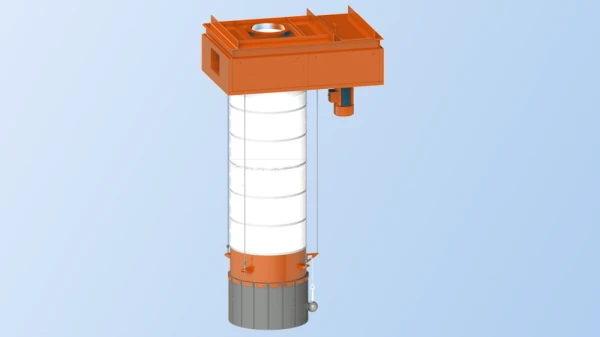
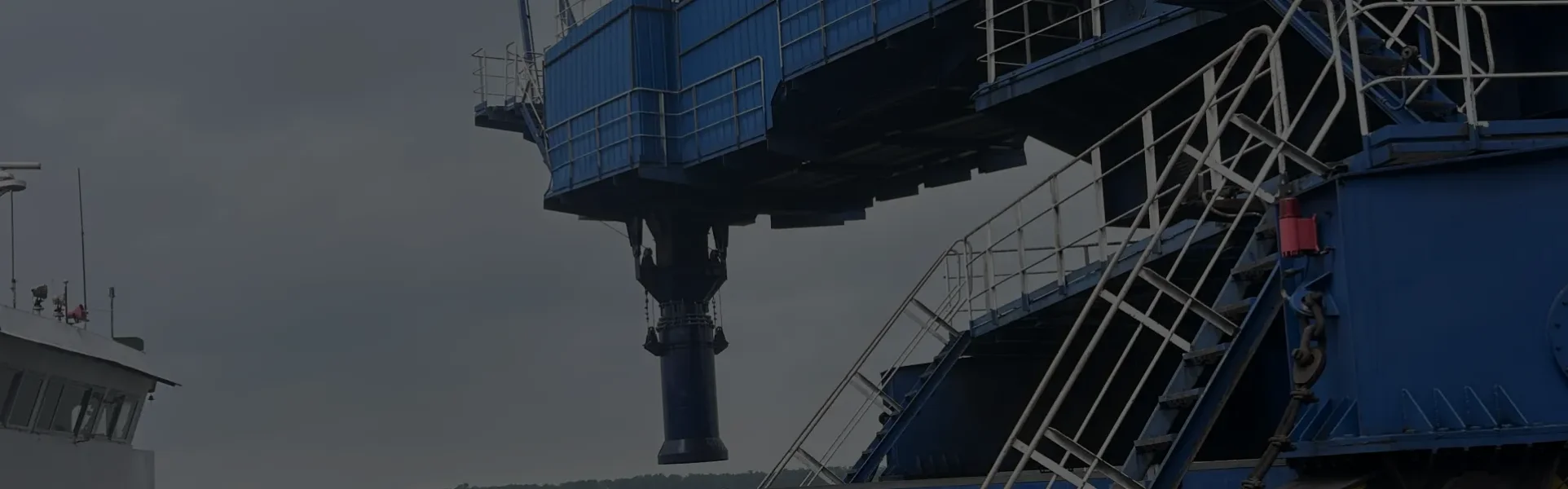
This is a free fall telescopic chute for radial telescopic ship loader in a terminal.
So, Which One Is Better?
If dust suppression is the main priority, the answer is clear: cascade telescopic chutes outperform free-fall designs in most dusty applications.
That said, free-fall telescopic chutes still have their place. They are simple, reliable, and suitable for low-dust materials or projects with tight budgets.
Final Thoughts
Choosing between a cascade chute and a free-fall telescopic chute isn't just a technical decision—it's an operational one. Understanding your material, loading rate, and environmental requirements is essential.
For fine, dusty materials and high-capacity loading systems, cascade telescopic chutes offer better dust control, gentler material handling, and cleaner operations. In today's regulatory and environmental landscape, that often makes them the smarter long-term solution.
- How a Cascade Chute Achieves Dust-Free Bulk Material Loading
- Environmental Benefits of Cascade Chutes in Bulk Material Handling
- Telescopic Chute for Grain Loading Applications
- Wear Resistant Design of Telescopic Chutes for Abrasive Materials
- How to Choose Chute Tube Material for Telescopic Chutes
- How Telescopic Chutes Reduce Material Degradation and Spillage

Table of Contents

Leading Mobile Bulk Material Handling Equipment Manufacturer in China. A high-tech enterprise specializing in R&D and manufacturing of stacker conveyors, ship loaders, and bucket wheel reclaimers. We provide comprehensive mobile solutions, including mobile hopper feeders, truck unloaders (surface feeders), and transfer conveyors, alongside high-performance mobile crushing and screening plants for global bulk material processing.
How to Contact
- WhatsApp: +8617821512097
- E-mail: [email protected]
-
 Add: China

