
 REQUEST A QUOTE
 EN
EN English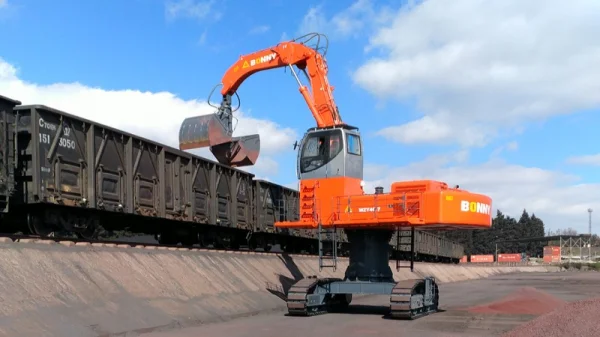
Just let we know what you want, and we will get in touch with you as soon as possible!

Dual Power Material Handler for Ports: Diesel vs Electric Operating Cost
As ports adopt greener, more efficient handling equipment, dual-power material handlers—machines that can operate on electric power and diesel—are gaining traction. Evaluating the operating costs of diesel vs electric modes helps you choose the most cost-effective solution for your port handling needs. This article breaks down the key cost factors, real-world trade-offs, and when each power mode makes sense in port material handling.

1. What Is a Dual Power Material Handler?
A dual power material handler integrates:
- a diesel engine for travel or remote operation, and
- an electric drive system (via cable or plug-in) for low-emission, low-cost working mode.
This design gives flexibility to switch between power sources depending on the operating environment and cost considerations.
Uses in ports:
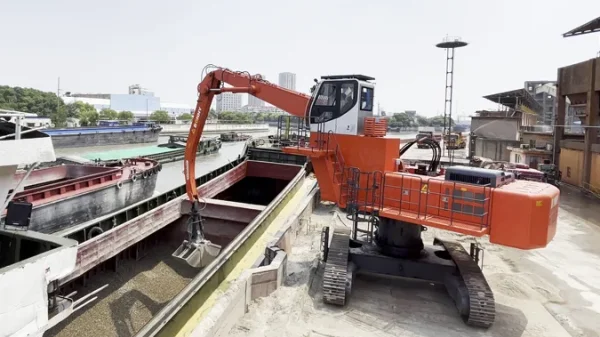
- Ship unloading
- Hopper feeding
- Yard stockpiling
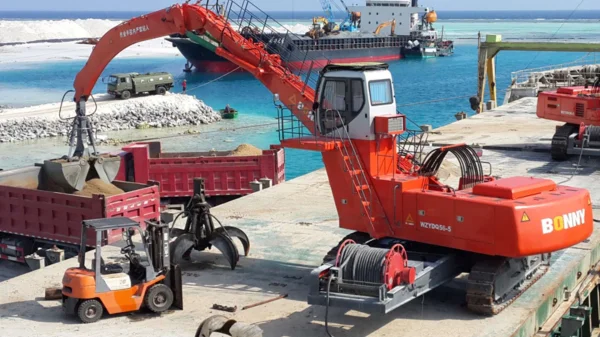
- Rail and truck loading
2. Operating Cost Components
When comparing diesel vs electric, the main operating cost elements include:
Diesel Mode
- Fuel costs (diesel consumption per hour)
- Maintenance costs (engine oil, filters, DPF servicing)
- Emissions compliance costs (higher in strict regulation zones)
Diesel costs tend to be volatile based on global oil prices and regional taxes.
Electric Mode
- Electricity costs (per kWh industrial rate)
- Lower maintenance (fewer moving parts, no combustion emissions)
- Potential grid incentives or lower tariffs
Electricity prices are generally more stable and often cheaper on a per-unit energy basis than diesel fuel, especially at industrial rates.

3. Diesel vs Electric: Relative Cost Drivers
Energy / Fuel Costs
- Diesel engines consume large quantities of fuel with lower energy efficiency than electric motors.
- Ports with access to low-cost industrial power often see electric operation costs significantly lower per hour than diesel consumption, especially when running continuously.
Electric motors can convert 80–90% of electrical energy into motion, whereas diesel engines typically convert ~30–40% of fuel energy into mechanical work (typical internal combustion efficiency). Electric thus is inherently more energy efficient per unit output.
Maintenance Costs
- Diesel systems require frequent servicing of filters, oil changes, and engine systems.
- Electric drive systems have fewer moving parts and generally lower routine maintenance.
- Dual-power systems may share some costs, but electric portions tend to be cheaper to maintain.
Emissions & Regulatory Impact
- Diesel mode emits NOx, CO₂, and particulates, leading to higher compliance and potential carbon pricing costs.
- Electric mode enables zero on-site emissions, helping ports meet low-emission zone regulations and environmental targets. Environmental policy incentives often support port electrification.
4. Example Cost Comparison (Illustrative)
| Cost Factor | Diesel Mode | Electric Mode |
| Hourly energy cost | Higher (fuel price volatility) | Lower (stable electricity rates) |
| Maintenance | Higher (engine servicing, fluids) | Lower (simplified electric drive) |
| Emissions compliance | Higher (fee, taxes, carbon costs) | Minimal on-site emissions |
| Noise & environmental impact | Higher | Lower |
| Infrastructure needs | Basic diesel storage | Power connection & cable infrastructure |
Ports with high duty cycles (many hours per day) often see electric operation payback faster due to lower energy + maintenance costs.
5. When Diesel Still Makes Sense
Diesel remains essential when:
- No reliable or continuous grid power is available
- The material handler must travel long distances within or between facilities
- Operations are intermittent or in remote areas without easy electrification
Dual power allows keeping diesel for mobility while using electric where available to optimize operating cost.
6.Investing in Dual Power: Cost Trade-Offs
Upfront Investment
- Dual power handlers typically cost more initially than pure diesel due to added electric systems and controls.
- However, total cost of ownership (TCO) can become lower over time, especially in environments where electricity is cheaper than diesel and emissions penalties are significant.
- Some industrial vehicle studies show electric operation significantly reduces fuel cost (with electricity cost much lower than diesel) and lowers long-term operating costs compared to pure diesel fleets.
Infrastructure Requirements
- Electric mode requires power infrastructure (cable reels, plugs, shore power), which is an upfront cost but generally lower than ongoing diesel fuel costs.
- For busy multi-berth ports, shared power infrastructure spreads cost across many handlers.

7. Real-World Example: Port Implementation
In many major ports, electrification strategies include:
- Retrofit material handlers with electric drive capability
- Provide shore power points at key working bays
- Use dual-power handlers for high-use docks
This strategy helps achieve emissions goals while lowering operational energy cost per ton handled. Electrification of port equipment is also part of broader regulatory trends that encourage clean energy adoption to reduce carbon footprints.
8. Practical Guidelines for Port Operators
- Assess energy cost locally: Compare local industrial electricity rates vs diesel fuel costs.
- Estimate annual operating hours: Dual power yields better ROI if electric usage is high.
- Consider emissions regulations: Electric operation can avoid compliance costs.
- Plan power infrastructure: Include power hookup locations and cable management.
- Monitor maintenance cost: Electric drive systems reduce engine-related servicing expenses.
9. Summary: Diesel vs Electric Operating Costs
| Decision Factor | Diesel | Electric |
| Hourly operating cost | Higher | Lower |
| Fuel/electric efficiency | Lower | Higher |
| Maintenance cost | Higher | Lower |
| Emissions | High | Zero on-site |
| Ideal use case | Remote, no grid | Grid-connected, high duty |
In many port material handling scenarios, particularly heavy or continuous duty, electric mode operation results in significantly lower operating costs than diesel, while diesel remains useful for mobility and remote work. Dual power material handlers provide the best of both worlds: low operating cost and high flexibility.
- Electric Material Handler for Ports, Scrap & Bulk Handling
- What Is a Material Handler and How Does It Work? Buyer’s Guide
- Best Material Handler Attachments for Scrap Metal, Bulk Materials, and Timber Handling
- How to Choose the Right Grab for a Material Handler: Clamshell, Orange Peel, or Magnet
- Mobile Material Handler for Rail Wagon Loading & Unloading
- Wheeled vs Tracked Material Handler: Which One Is Right for Your Project?

Table of Contents

Leading Mobile Bulk Material Handling Equipment Manufacturer in China. A high-tech enterprise specializing in R&D and manufacturing of stacker conveyors, ship loaders, and bucket wheel reclaimers. We provide comprehensive mobile solutions, including mobile hopper feeders, truck unloaders (surface feeders), and transfer conveyors, alongside high-performance mobile crushing and screening plants for global bulk material processing.
How to Contact
- WhatsApp: +8617821512097
- E-mail: [email protected]
-
 Add: China

