
 REQUEST A QUOTE
 EN
EN English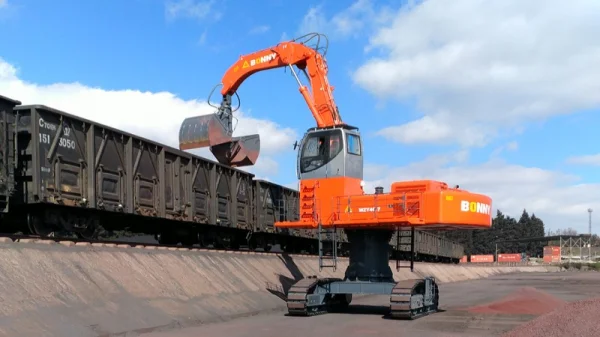
Just let we know what you want, and we will get in touch with you as soon as possible!

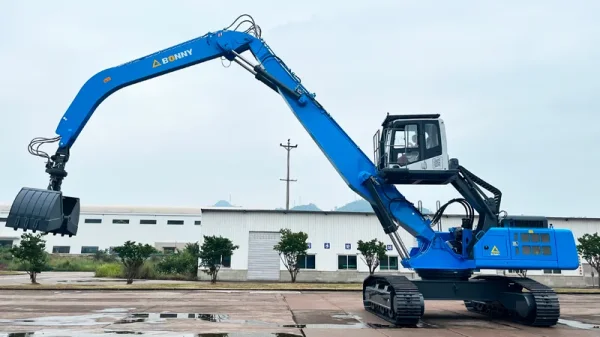
Wheeled vs Tracked Material Handler: Which One Is Right for Your Project?
Choosing the right material handler is a critical decision that directly affects productivity, operating cost, site safety, and long-term return on investment. One of the most common questions faced by project owners, port operators, and plant managers is:
Should I choose a wheeled material handler or a tracked material handler?
This article provides a clear, practical comparison between wheeled and tracked material handlers, helping you select the best solution for your specific project.

What Is a Material Handler?
A material handler is a heavy-duty machine designed for loading, unloading, transferring, and stockpiling materials such as:
- Bulk materials (coal, ore, clinker, grain)
- Scrap metal
- Timber and woodchips
- Industrial waste
Material handlers are widely used in ports, rail terminals, scrap yards, power plants, cement plants, and recycling facilities.
Overview: Wheeled vs Tracked Material Handler
| Feature | Wheeled Material Handler | Tracked Material Handler |
| Undercarriage | Rubber tyres | Crawler tracks |
| Mobility | Very high | Moderate |
| Travel speed | Fast (20–25 km/h) | Slow (3–5 km/h) |
| Ground condition | Paved / hard surface | Soft / uneven ground |
| Stability | High (with outriggers) | Very high |
| Typical applications | Ports, terminals, yards | Mines, rough yards |
Wheeled Material Handler: Key Characteristics

What Is a Wheeled Material Handler?
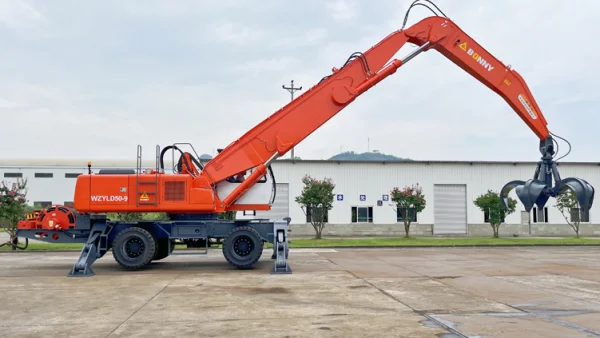
A wheeled material handler is mounted on rubber tyres, often equipped with outriggers or a pylon, allowing fast relocation between working areas.
Main Advantages
- High mobility: Easy and fast movement across large yards
- Lower operating cost on paved surfaces
- Excellent flexibility for multi-task operations
- Ideal for ports and terminals
- Compatible with electric and dual-power systems
Typical Applications
- Port ship unloading and loading
- Rail wagon unloading
- Scrap yard operations
- Steel plants
- Fertilizer and grain terminals
Typical Attachments
- Clamshell grab (coal, grain, fertilizer)
- Orange peel grab (scrap metal)
- Electromagnet
- Hook grab (steel coils, big bags)
Tracked Material Handler: Key Characteristics

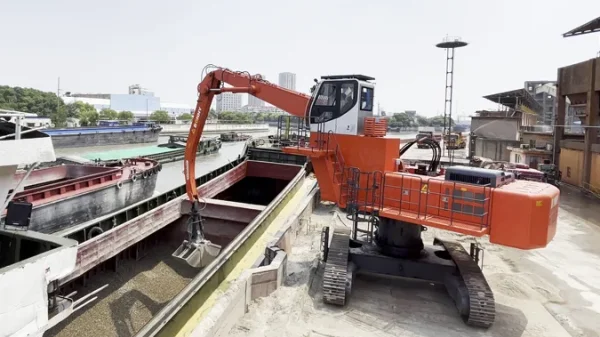
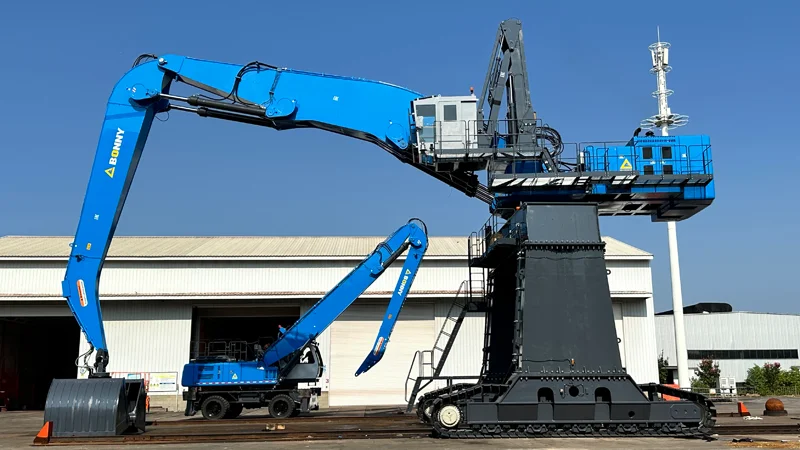
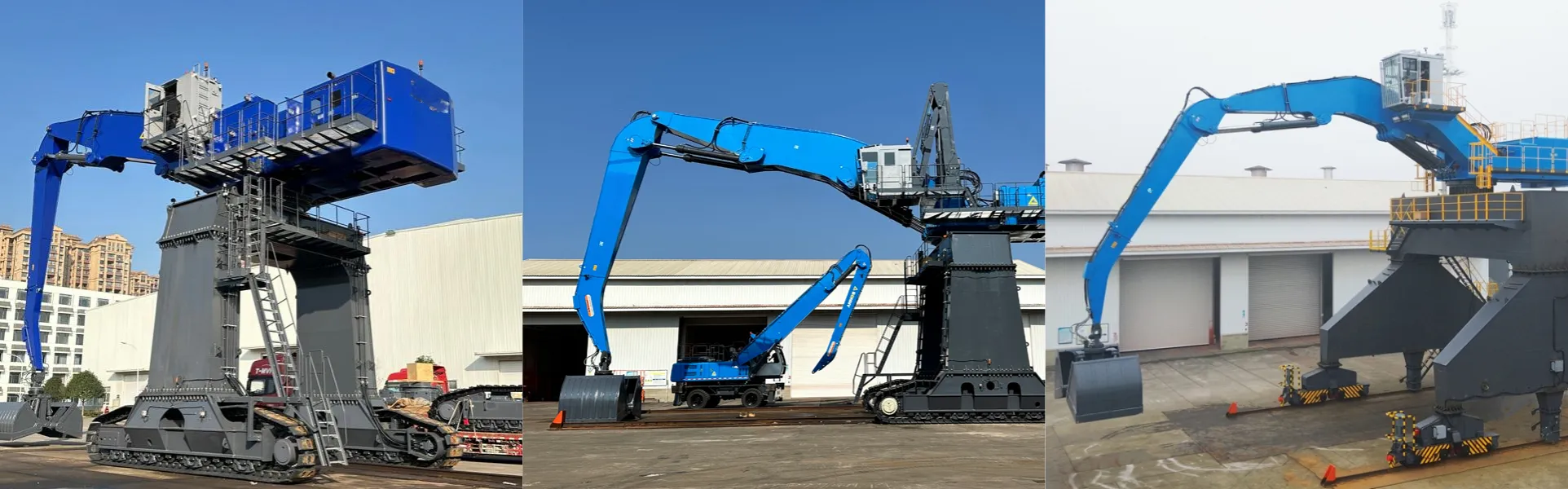
This is a mobile port material handler for ship unloading.
What Is a Tracked Material Handler?
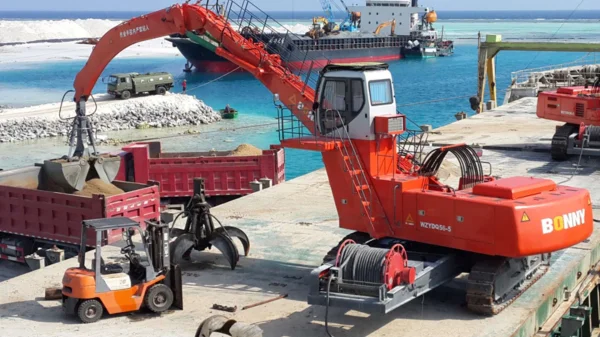
A tracked material handler uses a crawler undercarriage, offering superior stability and low ground pressure, especially on soft or uneven terrain.
Main Advantages
- Excellent stability without outriggers
- Low ground pressure
- Reliable performance on mud, gravel, soil
- Higher lifting stability at long reach
- Suitable for harsh environments
Typical Applications
- Mining and quarry operations
- Coal yards and power plants
- Biomass and wood handling yards
- Rough or unpaved industrial sites
- Heavy-duty clamshell grabs
- Hydraulic grabs
- Log grapples
- Biomass grabs
Detailed Comparison by Key Factors
1. Mobility and Relocation
- Wheeled type: Best for projects requiring frequent relocation between ship holds, rail tracks, or stockpiles.
- Tracked type: Better for fixed or semi-fixed work zones.
- Winner: Wheeled material handler
2. Ground Conditions
- Wheeled type: Requires concrete or asphalt surfaces.
- Tracked type: Works reliably on soft, muddy, or uneven ground.
- Winner: Tracked material handler
3. Stability and Lifting Safety
- Wheeled type: Very stable with outriggers deployed.
- Tracked type: Naturally stable due to wide track base.
- Winner: Tracked material handler (slight advantage)
4. Operating Cost
- Wheeled type: Lower fuel consumption and easier maintenance on hard surfaces.
- Tracked type: Higher maintenance cost for undercarriage components.
- Winner: Wheeled material handler
5. Port and Environmental Compliance
- Wheeled type: Commonly available in electric or dual-power versions.
- Tracked type: Mostly diesel-powered.
- Winner: Wheeled material handler
Which One Is Right for Your Project?
Choose a Wheeled Material Handler If:
- Your site has paved or concrete surfaces
- You operate in ports or terminals
- You need fast relocation
- You want electric or dual-power operation
- You handle multiple materials or tasks
- Your site has soft or uneven ground
- The operation area is fixed
- Stability is the top priority
- You work in mining, biomass, or rough yards
- Mobility speed is less important
Typical Project Examples
Port Ship Unloading
- Best choice: Wheeled material handler
- Why: High mobility, long reach, electric or dual-power option
Coal Yard or Power Plant
- Best choice: Tracked material handler
- Why: Uneven ground, continuous heavy-duty operation
Scrap Yard with Concrete Surface
- Best choice: Wheeled material handler
- Why: Fast movement, magnet and orange peel grab compatibility
- Ground condition
- Required mobility
- Environmental regulations
- Operating cost
- Application type
A well-matched material handler can increase efficiency, reduce downtime, and improve safety, delivering long-term value to your project.
- Electric Material Handler for Ports, Scrap & Bulk Handling
- What Is a Material Handler and How Does It Work? Buyer’s Guide
- Best Material Handler Attachments for Scrap Metal, Bulk Materials, and Timber Handling
- Dual Power Material Handler for Ports: Diesel vs Electric Operating Cost
- How to Choose the Right Grab for a Material Handler: Clamshell, Orange Peel, or Magnet
- Mobile Material Handler for Rail Wagon Loading & Unloading

Table of Contents

Leading Mobile Bulk Material Handling Equipment Manufacturer in China. A high-tech enterprise specializing in R&D and manufacturing of stacker conveyors, ship loaders, and bucket wheel reclaimers. We provide comprehensive mobile solutions, including mobile hopper feeders, truck unloaders (surface feeders), and transfer conveyors, alongside high-performance mobile crushing and screening plants for global bulk material processing.
How to Contact
- WhatsApp: +8617821512097
- E-mail: [email protected]
-
 Add: China

