
 REQUEST A QUOTE
 EN
EN English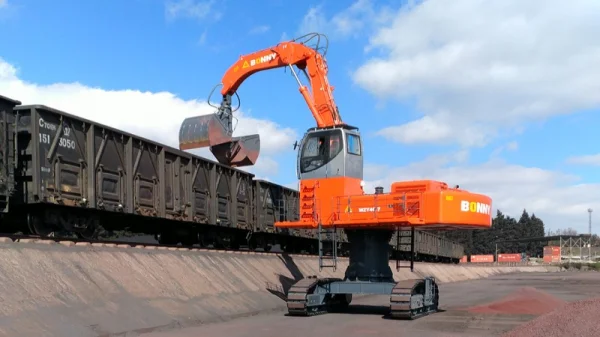
Just let we know what you want, and we will get in touch with you as soon as possible!

Best Material Handler Attachments for Scrap Metal, Bulk Materials, and Timber Handling
Material handlers are versatile machines used across industries such as ports, scrap yards, steel mills, lumber terminals, and bulk terminals. But the true productivity of a material handler lies in choosing the right attachment for the job. This article highlights the best attachments for handling scrap metal, bulk materials, and timber, explains how each works, and offers guidance on selecting the right one for your operation.
Why Material Handler Attachments Matter
The right attachment:
- Improves productivity (TPH)
- Reduces operating cost
- Minimizes wear and maintenance
- Enhances operator safety
- Reduces material loss and damage
Choosing the wrong attachment can significantly reduce efficiency and increase operating cost.
Attachments for Scrap Metal Handling

1. Orange Peel Grab (Multi-Tine Grab)
Best for: Loose, irregular scrap, shredded metal, industrial waste.
Key features:
- 4–6 curved tines
- Deep penetration into scrap piles
- Excellent retention of irregular loads
- Hydraulic rotator for orientation control
Why it's ideal:
Orange peel grabs are specifically designed for irregular, bulky scrap. The multiple tines provide better grip and containment than two-shell grabs.
2. Magnet (Electromagnet)
Best for: Ferrous metal (steel sheets, billets, turnings)
Key features:
- Fast and selective handling of ferrous metal
- Ideal for scrap yards and steel processing
- Available with generator or battery power
- Minimal mechanical wear
Why it's ideal:
Magnets deliver rapid pickup and release, making them extremely productive for handling steel scrap and materials with high ferrous content.

3. Shear / Scrap Cutter
Best for: Cutting large scrap (beams, pipes, profiles)
Key features:
- High cutting force
- Heavy-duty steel construction
- Often paired with orange peel grabs
Why it's ideal:
Not a primary grab, but extremely useful when cutting oversized scrap into manageable sizes for processing.
Attachments for Bulk Material Handling
1. Clamshell Grab
Best for: Loose bulk commodities
Typical handled materials:
- Coal
- Sand & gravel
- Cement clinker
- Fertilizer
- Grain
- Ore fines
Key features:
- Two shells with a hinge
- High volumetric capacity
- Efficient scoop and release
- Available in multiple sizes
Why it's ideal:
Clamshell grabs are optimal for free-flowing and semi-free-flowing materials where fill factor and cycle efficiency are priorities.

2. Hydraulic Grab (General Bulk)
Best for: Semi-sticky or mixed bulk materials
Typical materials:
- Limestone
- Slag
- Clay
- Mixed industrial waste
Key features:
- Powerful hydraulic closing force
- Better material control in tough bulk conditions
- Strong penetration
Why it's ideal:
When the material bridges or clumps, hydraulic grabs outperform simple clamshells.
Attachments for Timber & Wood Handling
1. Log Grapple (Timber Grab)
Best for: Logs and long timbers
Key features:
- Two large curved arms
- Secure grip on round timber
- Hydraulic rotator for orientation
- Wide opening capacity
Why it's ideal:
Designed to handle logs, roundwood, and timber bundles with precision and minimal wood damage.

2. Biomass / Woodchip Grab
Best for: Loose, low-density woodchip & biomass
Key features:
- Large volumetric shells
- Fast cycle time
- Lightweight, robust design
Why it's ideal:
Perfect for woodchips, bark, and biomass–type materials with low density but high volume.
How to Choose the Right Attachment
The right attachment depends on three core factors:
A. Material Type & Properties
- Scrap metal: irregular shapes, high density → orange peel / magnet
- Bulk: free flow or clumpy → clamshell / hydraulic grab
- Timber: long, cylindrical shapes → log grapple
- Biomass: low density, high volume → biomass grab
B. Handling Requirements (TPH)
Estimate the target throughput (tons/hour) to size the grab volume appropriately: TPH ≈ Grab Volume (m³) × Bulk Density (t/m³) × Cycles/hour
C. Carrier Machine Capacity
Match attachment size with material handler capacity:
- Small handlers (15–30 t): 0.8–2.0 m³ grabs
- Medium handlers (30–45 t): 1.8–3.0 m³ grabs
- Large handlers (45–90 t+): 2.5–4.5+ m³ grabs
Quick Attachment Selection Guide
| Material Type | Best Attachment |
| Scrap metal | Orange peel grab / Magnet |
| Steel plates & billets | Magnet |
| Coal / sand | Clamshell grab |
| Clinker & ore | Hydraulic grab |
| Logs & timber | Log grapple |
| Woodchips & biomass | Biomass grab |
| Mixed waste | Orange peel grab |
Real-World Use Cases of Material Handler Attachments
1. Port Bulk Terminal
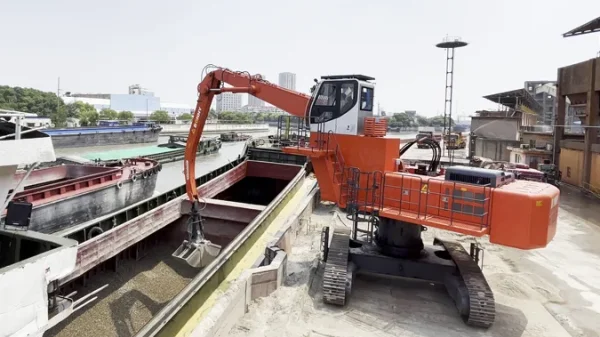
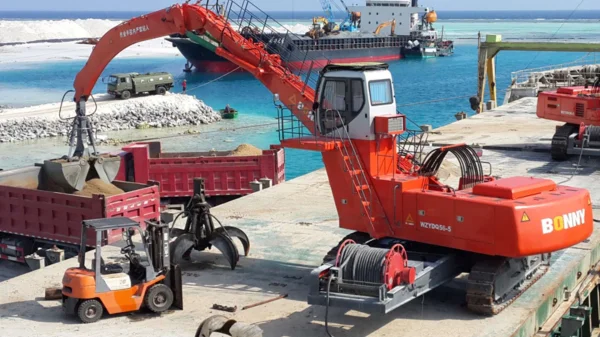
- Clamshell grab + material handler for ship unloading
- Transfers to hopper, conveyor, or stockpile
- High cycle efficiency
2. Scrap Recycling Yard
- Orange peel grab for sorting & stacking
- Magnet for selective steel removal
- Fast turnover and high productivity
3. Lumber & Biomass Terminal
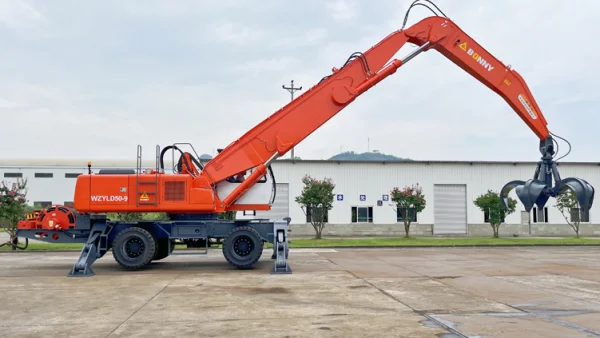
- Log grapple for lumber unloading
- Biomass grab for chip feeding to conveyors
- Minimal wood damage
There is no one attachment for all jobs. The best choice depends on:
- Material type
- Density and shape
- Throughput requirements
- Handler capacity
- Working environment
Whether it's a magnet for steel scrap, a clamshell grab for bulk coal, or a log grapple for timber, selecting the right attachment ensures maximum productivity, lower operating cost, and long equipment life.
- Electric Material Handler for Ports, Scrap & Bulk Handling
- What Is a Material Handler and How Does It Work? Buyer’s Guide
- Dual Power Material Handler for Ports: Diesel vs Electric Operating Cost
- How to Choose the Right Grab for a Material Handler: Clamshell, Orange Peel, or Magnet
- Mobile Material Handler for Rail Wagon Loading & Unloading
- Wheeled vs Tracked Material Handler: Which One Is Right for Your Project?

Table of Contents

Leading Mobile Bulk Material Handling Equipment Manufacturer in China. A high-tech enterprise specializing in R&D and manufacturing of stacker conveyors, ship loaders, and bucket wheel reclaimers. We provide comprehensive mobile solutions, including mobile hopper feeders, truck unloaders (surface feeders), and transfer conveyors, alongside high-performance mobile crushing and screening plants for global bulk material processing.
How to Contact
- WhatsApp: +8617821512097
- E-mail: [email protected]
-
 Add: China

