
 REQUEST A QUOTE
 EN
EN English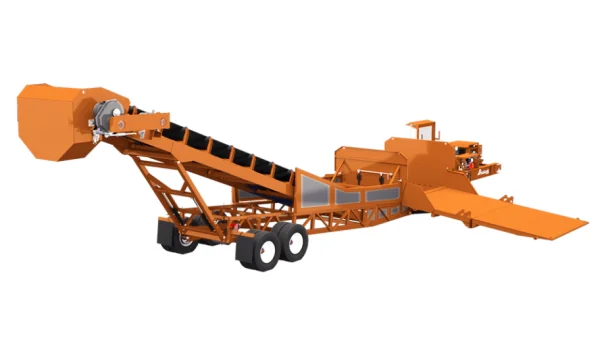
Just let we know what you want, and we will get in touch with you as soon as possible!

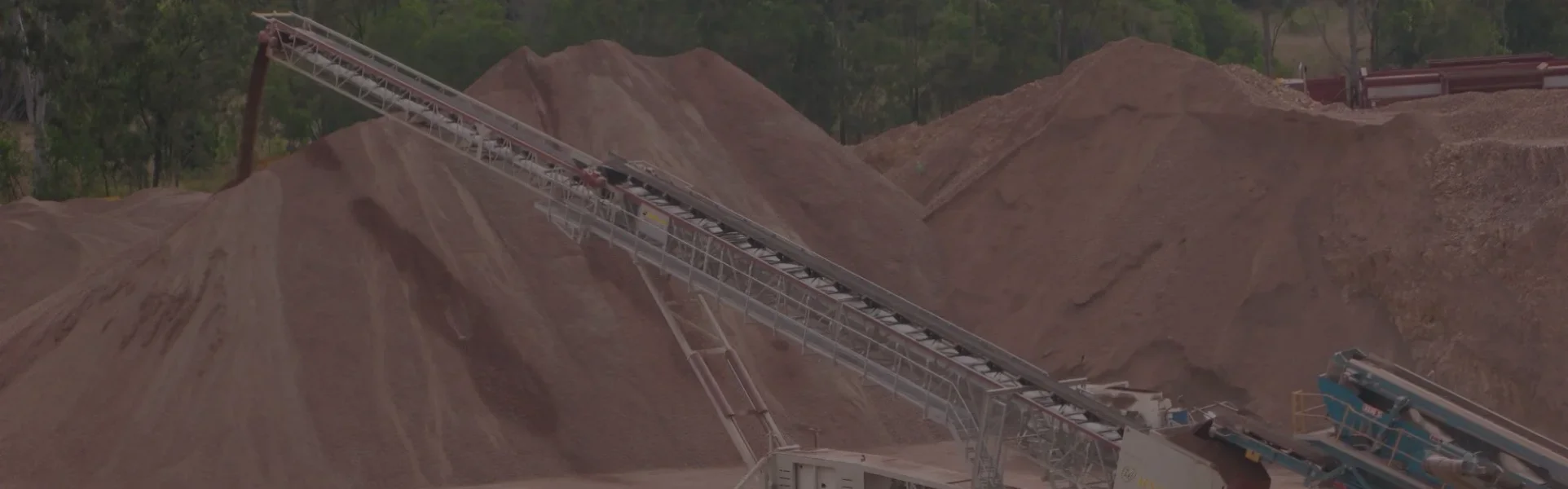
Bulk Material Truck Unloader: A Smarter Way to Handle Bulk Materials
In industries like mining, ports, power plants, cement production, and agriculture, moving bulk materials efficiently is a constant challenge. Whether it's coal, grain, sand, gravel, ore, or fertilizer, unloading trucks quickly and safely has a direct impact on productivity.
That's why more companies are investing in a bulk material truck unloader—a system designed to simplify unloading operations while reducing labor, equipment wear, and operating costs.
Instead of relying on slow, manual, or multi-step unloading methods, modern truck unloading systems create a smoother workflow from the moment a truck arrives on site.

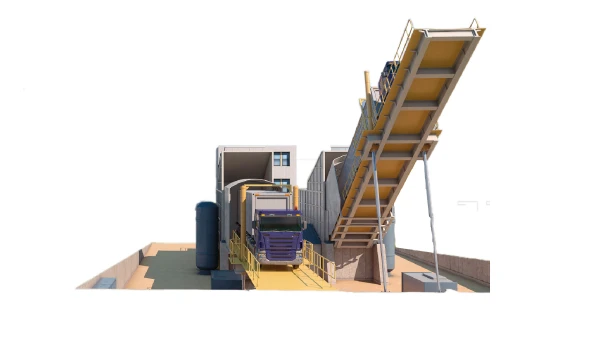
This is a drive over truck unloader for handling aggregate.
What Is a Bulk Material Truck Unloader?
A bulk material truck unloader is a receiving and transfer system used to unload loose materials from dump trucks or trailers. Once the material is discharged, the system transfers it onto conveyors, feeders, storage facilities, or processing equipment.
Depending on the application, truck unloaders can be designed as:
- Drive over truck unloaders
- Truck tipplers
- Mobile truck unloader, a type of surface feeder
- Mobile truck unloading stations
Each design serves the same goal: moving material efficiently while minimizing delays and extra handling.
Why Bulk Material Truck Unloader Matter
At first glance, unloading a truck may seem simple. But in large-scale operations handling hundreds or thousands of tons every day, even small inefficiencies become expensive.
Without an efficient unloading system, companies often deal with:
- Long truck waiting times
- Material spillage
- Extra loader operations
- Higher fuel consumption
- Dust pollution
- Increased labor costs
A properly designed bulk material truck unloader helps eliminate many of these issues.

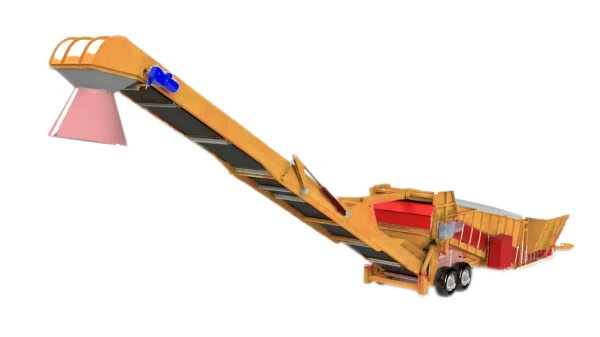
This is tracked drive over truck unloader for feeding mobile ship loader.
Common Materials Handled
One of the biggest advantages of these systems is versatility. They can handle a wide range of bulk materials, including:
- Coal
- Grains
- Aggregate
- Ore and Minerals
- Fertilizer and Cement
- And more bulk materials
How a Bulk Material Truck Unloader Works
Although designs vary, most systems follow a similar process.
- Trucks enter the unloading area.
- Material is discharged into a receiving hopper or unloading platform.
- A feeder regulates the material flow.
- Conveyors transport the material to the next stage of the operation.
The entire process is designed to keep material moving continuously with minimal interruption.
Different Types of Truck Unloading Systems
1. Drive Over Truck Unloader
This system allows trucks to drive directly over a hopper and unload material through a grating system below.
It's popular because it:
- Speeds up unloading
- Reduces truck turnaround time
- Requires less support equipment
Drive over systems are widely used in ports, mines, and aggregate plants.
2. Truck Tippler
A truck tippler lifts and tilts the entire truck or trailer to discharge material rapidly.
These systems are ideal for:
- High-capacity operations
- Sticky or difficult-flowing materials
- Automated unloading facilities
3. Mobile Truck Unloader
Mobile Truck unloader offer flexibility for temporary sites or changing operational layouts.
They are commonly used in:
- Port terminals
- Construction projects
- Temporary stockpile operations

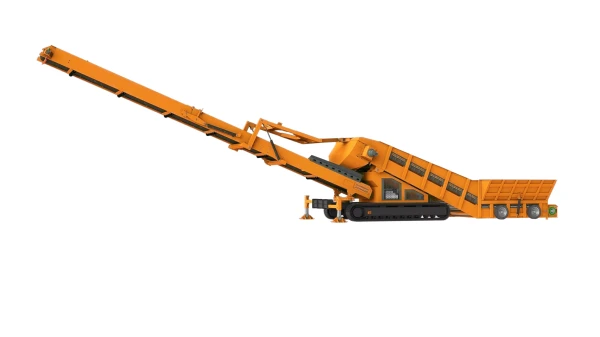
This is a tracked truck unloader for unloading crushed aggregate.
Key Benefits of Using a Bulk Material Truck Unloader
1. Faster Unloading Operations
Time matters in bulk handling. Efficient unloading systems reduce waiting times and improve site productivity.
2. Reduced Material Handling Costs
Direct unloading into conveyors eliminates unnecessary loader work and reduces fuel consumption.
3. Improved Safety
Modern systems reduce manual intervention and create safer unloading environments for operators and drivers.
4. Better Dust Control
Many systems include dust suppression or enclosed transfer points, helping operations meet environmental standards.
5. Continuous Material Flow
A steady and controlled material feed improves downstream equipment performance.
6. Lower Equipment Wear
When materials move more smoothly through the system, conveyors and feeders experience less stress and damage.
Important Design Considerations
Not every truck unloader is the same. The right system depends on several factors:
- Material type and characteristics
- Required unloading capacity (TPH)
- Truck size and configuration
- Site conditions and available space
- Environmental requirements
- Mobility needs
For example, a coal terminal may prioritize dust control and high throughput, while a grain facility may focus more on gentle handling and cleanliness.
Fixed vs Mobile Truck Unloaders
1. Fixed Systems
Fixed installations are best for:
- Permanent facilities
- High-capacity operations
- Continuous production environments
They offer maximum stability and throughput.
2. Mobile Systems
Mobile truck unloaders provide:
- Flexibility
- Easy relocation
- Lower installation requirements
They are ideal for temporary projects or operations with changing layouts.
Automation of Bulk Material Truck Unloader
Modern bulk material truck unloaders are becoming more advanced with:
- Automated control systems
- Remote monitoring
- Variable speed feeders
- Smart sensors for flow monitoring
Automation helps operators improve efficiency while reducing downtime and maintenance costs. A bulk material truck unloader may not always get the same attention as crushers, ship loaders, or stacker conveyors, but it plays a critical role in keeping operations moving efficiently.
From coal mines and grain terminals to aggregate plants and ports, these systems help companies unload materials faster, safer, and with fewer operating costs. As industries continue pushing for higher productivity and cleaner operations, reliable truck unloading systems are becoming less of a luxury and more of a necessity.
- Bulk Material Drive Over Truck Unloader for Coal, Grain and Aggregate
- Heavy Duty Drive Over Truck Unloading System for Mining and Ports

Table of Contents

Leading Mobile Bulk Material Handling Equipment Manufacturer in China. A high-tech enterprise specializing in R&D and manufacturing of stacker conveyors, ship loaders, and bucket wheel reclaimers. We provide comprehensive mobile solutions, including mobile hopper feeders, truck unloaders (surface feeders), and transfer conveyors, alongside high-performance mobile crushing and screening plants for global bulk material processing.
How to Contact
- WhatsApp: +8617821512097
- E-mail: [email protected]
-
 Add: China

